- Born in Colombia
- Ecologist
- Research assistant and consultant: UniAndes, WWF, Inter American Development Bank
- MSc Ecosystems Governance
- PhD Sustainability Science
- Research interests:
- Regime Shifts
- Complex systems
- Networks
- Collective action
Tipping points and their teleconnections



Resilience

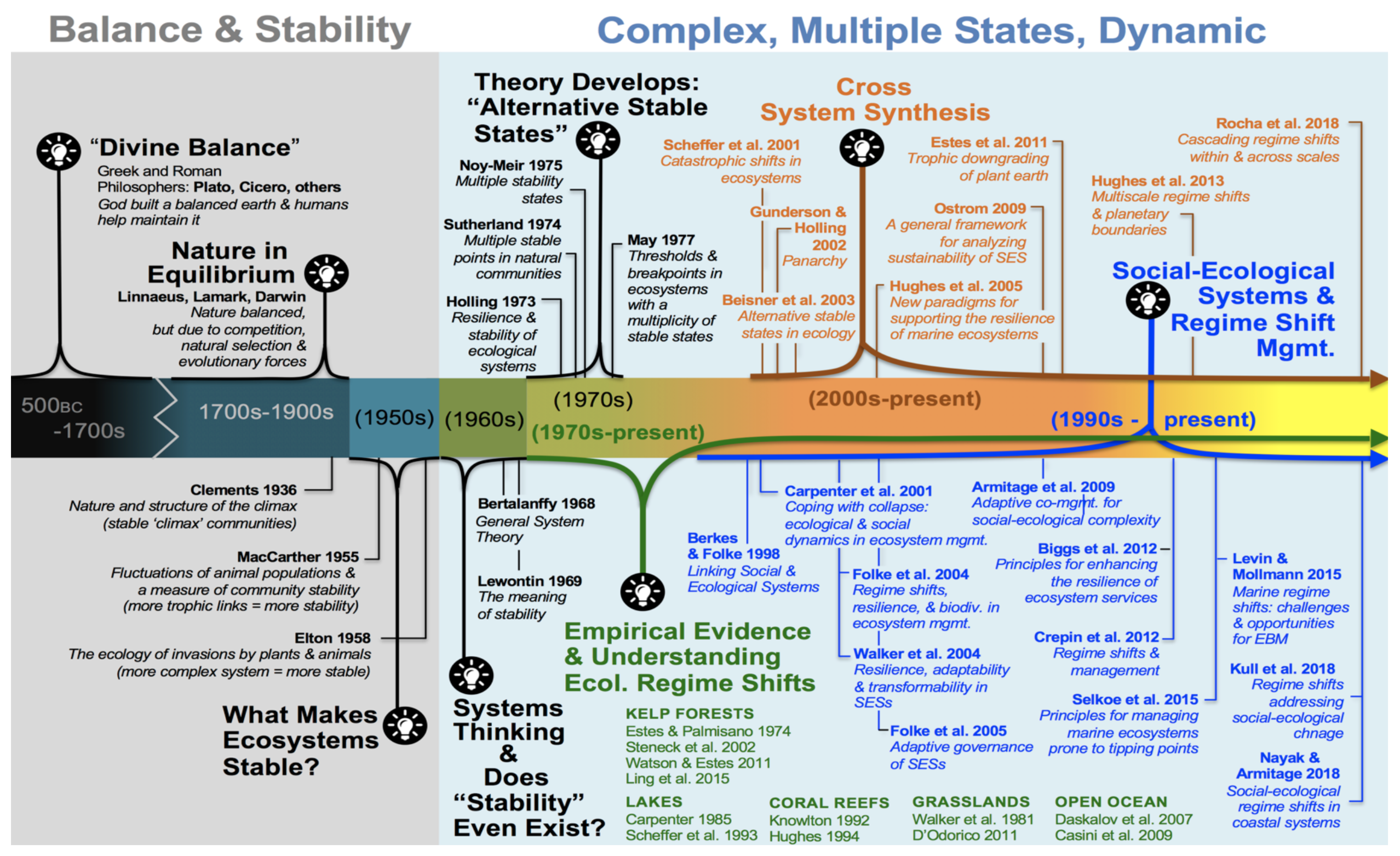
- Henri Poincaré discovered bifurcations in 1886
- Bifucations (non-linear dynamics) are foundational to studies across
natural, social sciences and humanities.
E.g poverty traps, segregation, evolution of cooperation, cancer, language, finance, climate, the states of matter, among many others. - In 1960-70s ecology: related to the meaning of stability and
catastrophe theory
(Lewontin, MacArthur, Holling, Ludwig, Walters, Noy-Meir, May)
Regime shifts history
Source: Jenn Burt PhD Thesis
Hysteresis
“Hysteresis is the dependence of the state of a system on its history … rate-dependent hysteris is a dynamic lag between inputs and ouptups” —Wikipedia
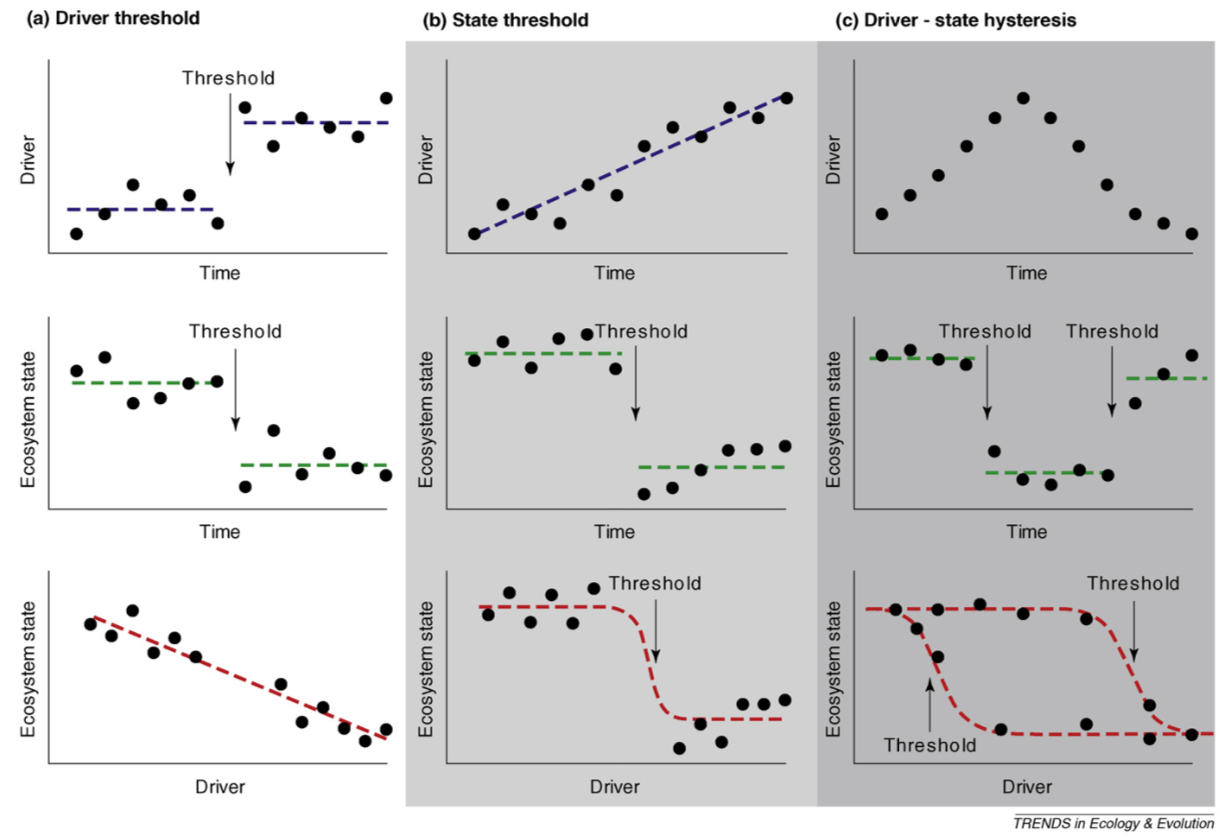
Andersen, J. et al. Trends Ecol Evol. (2009).
Abruptness affects the capacity to adapt to changes
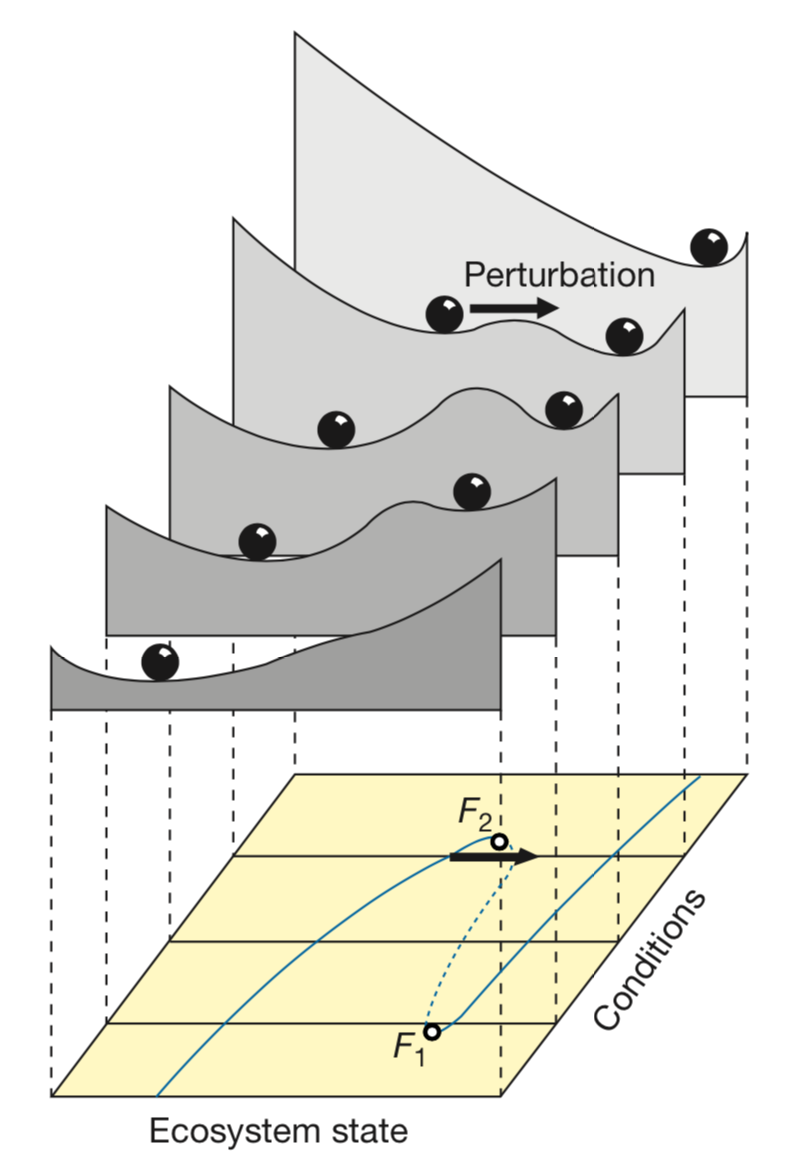
Regime shifts and resilience
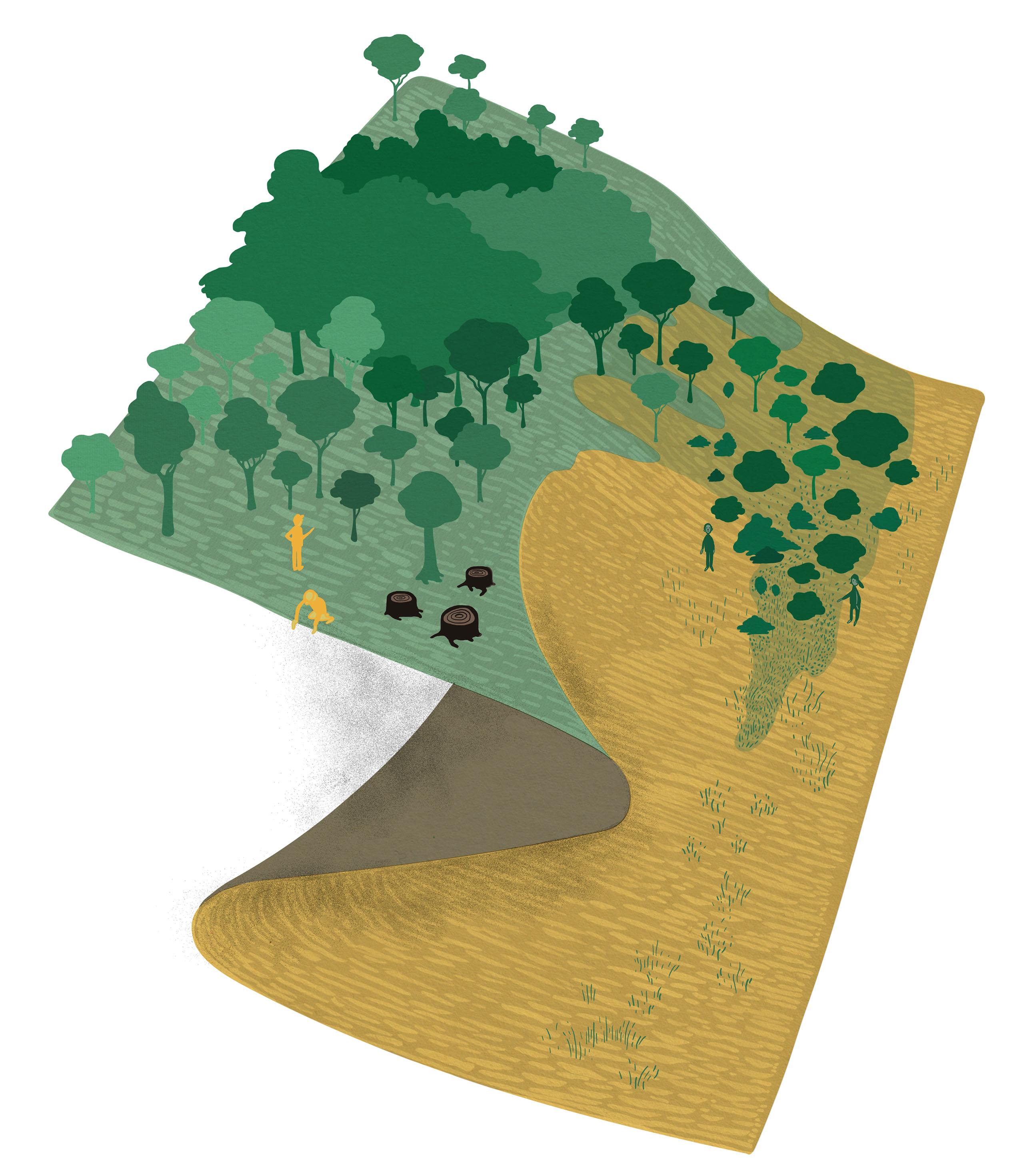
Why are regime shifts important?
Purpose
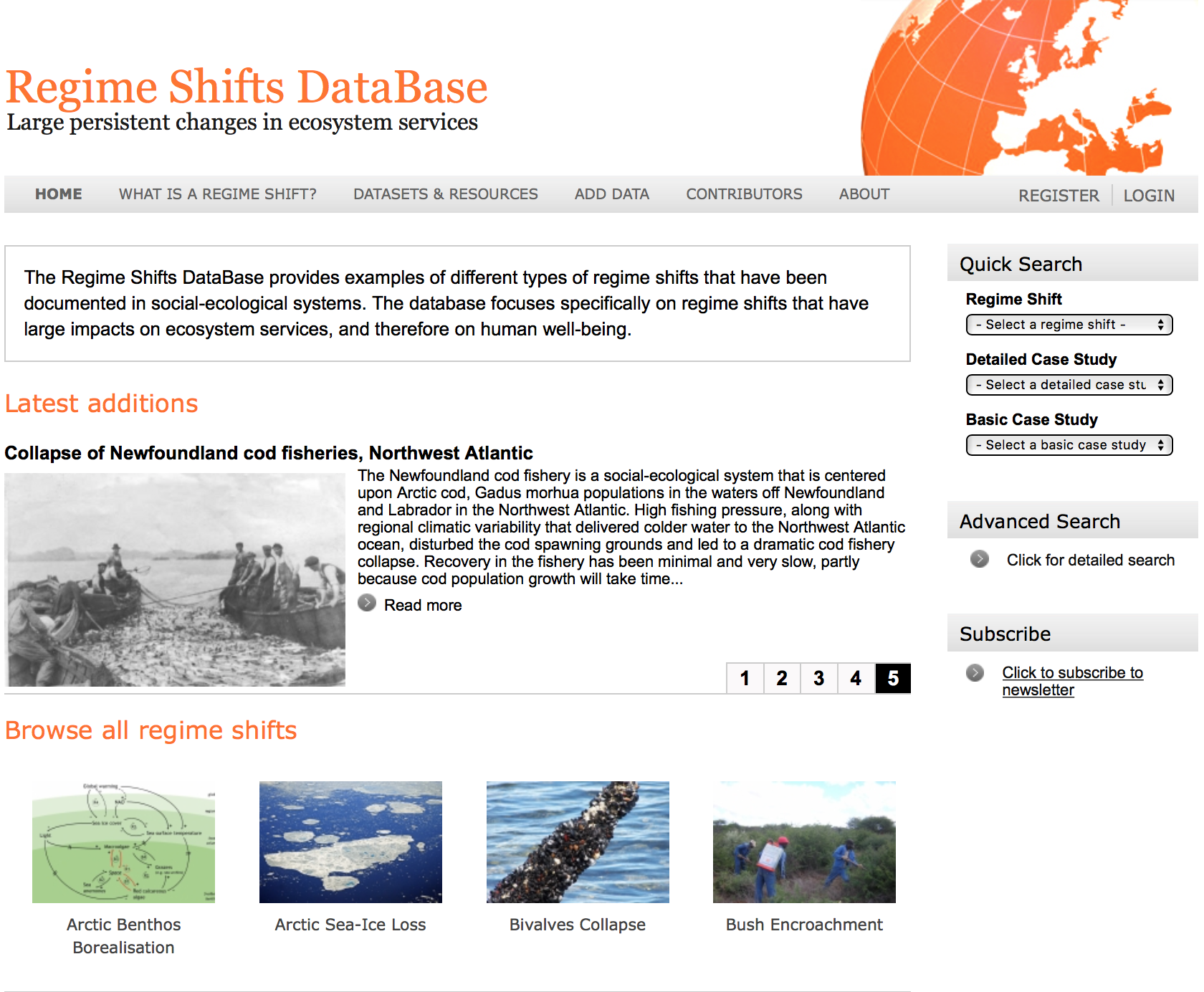
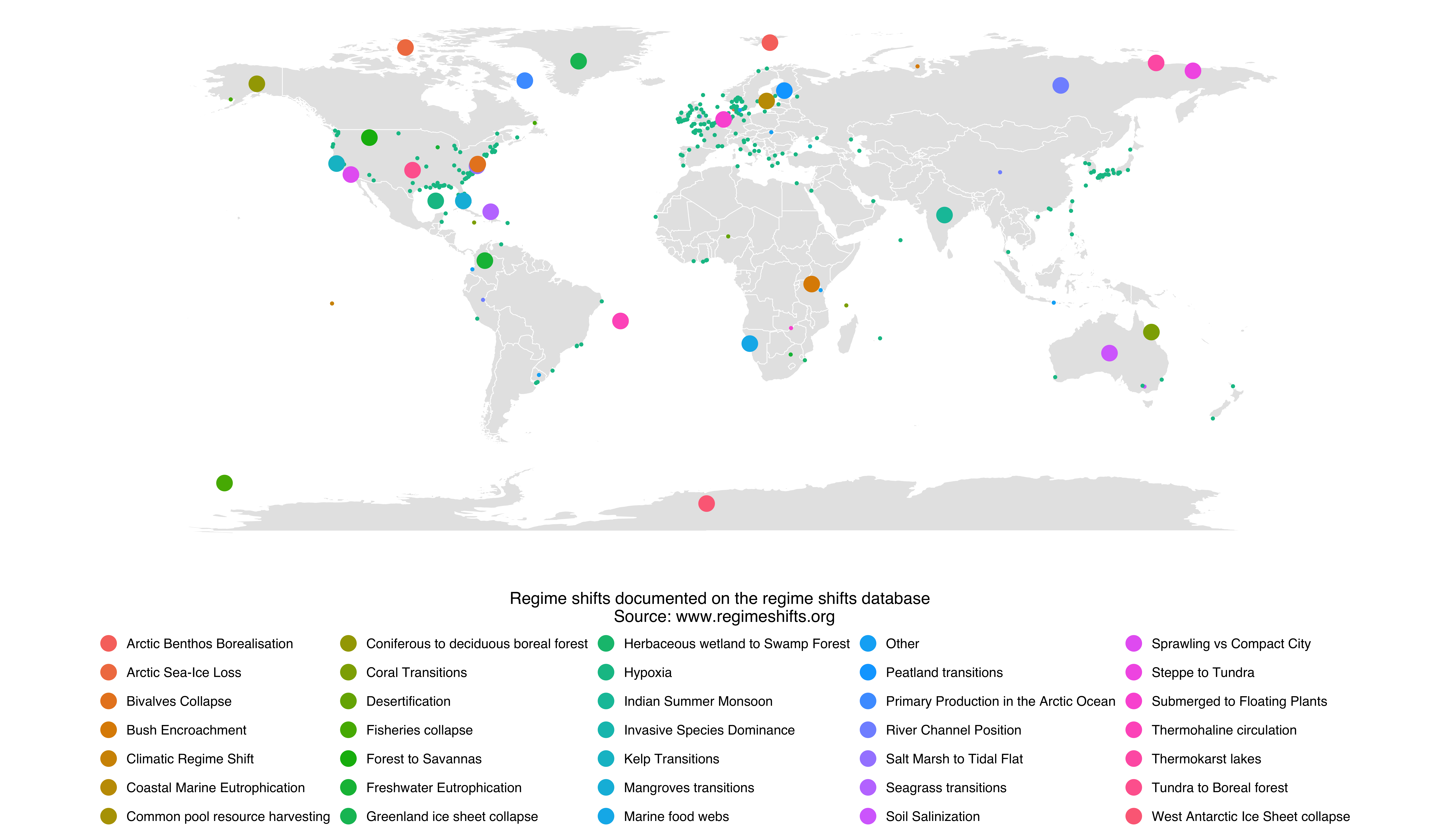
Criteria for selecting regime shifts
Back to theory
\[\frac{d🐠}{d⏱️}=🐠 \left( 1- \frac{🐠}{🌎} \right) - 🎣 \left( \frac{🐠^2}{🐠^2+1} \right)\]
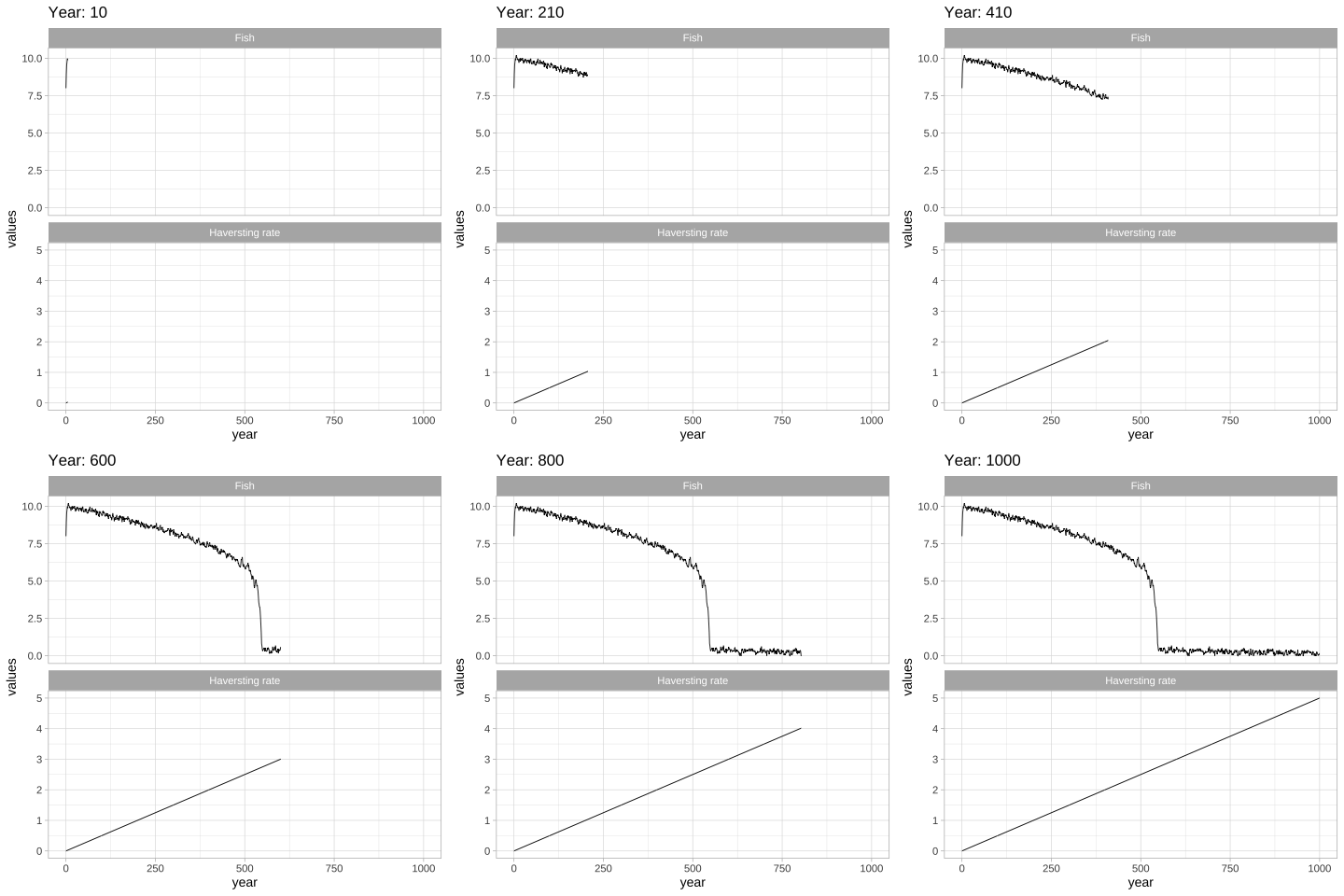
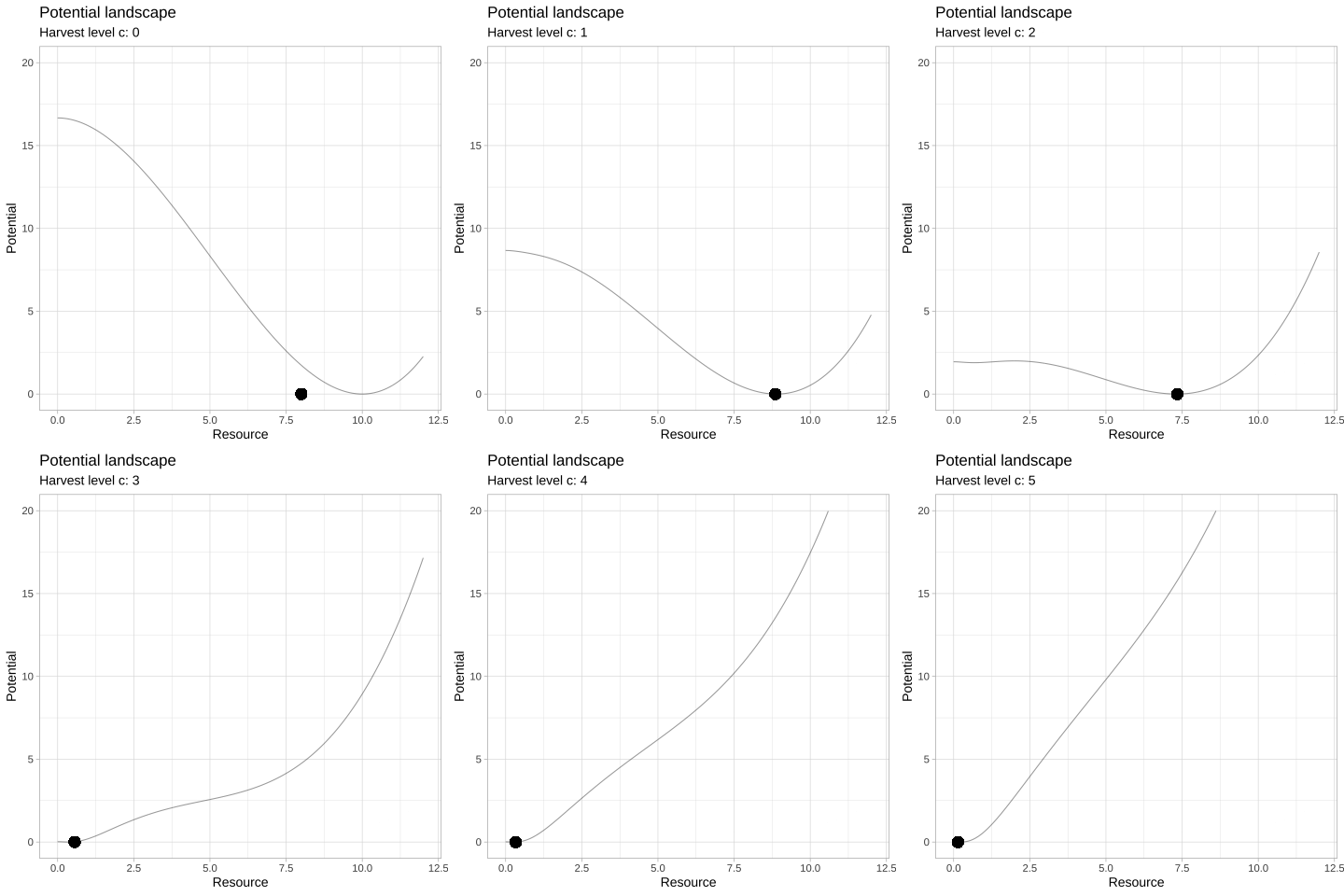
Where is the tipping point?
Where is the tipping point?
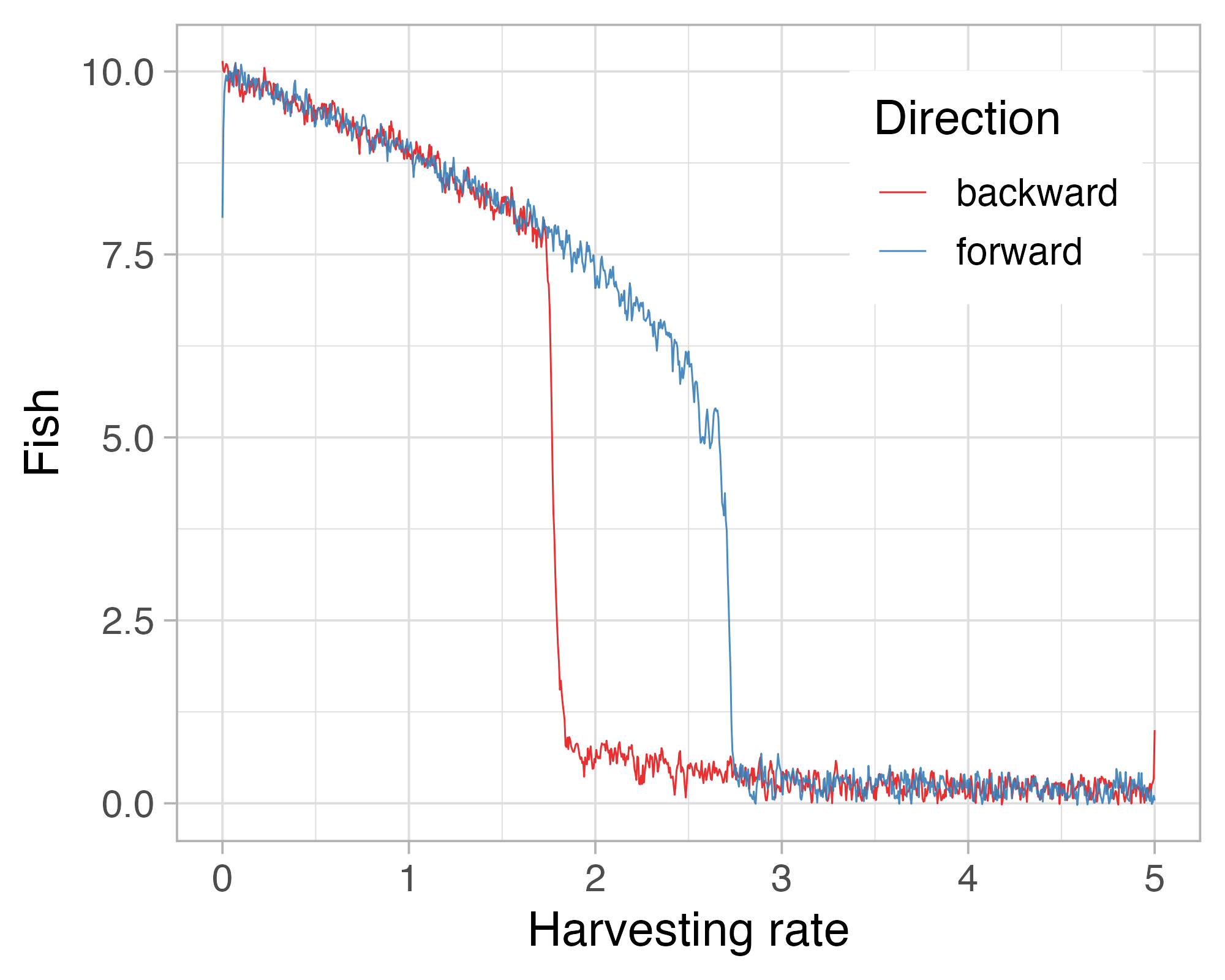
Tipping points
Clarifications
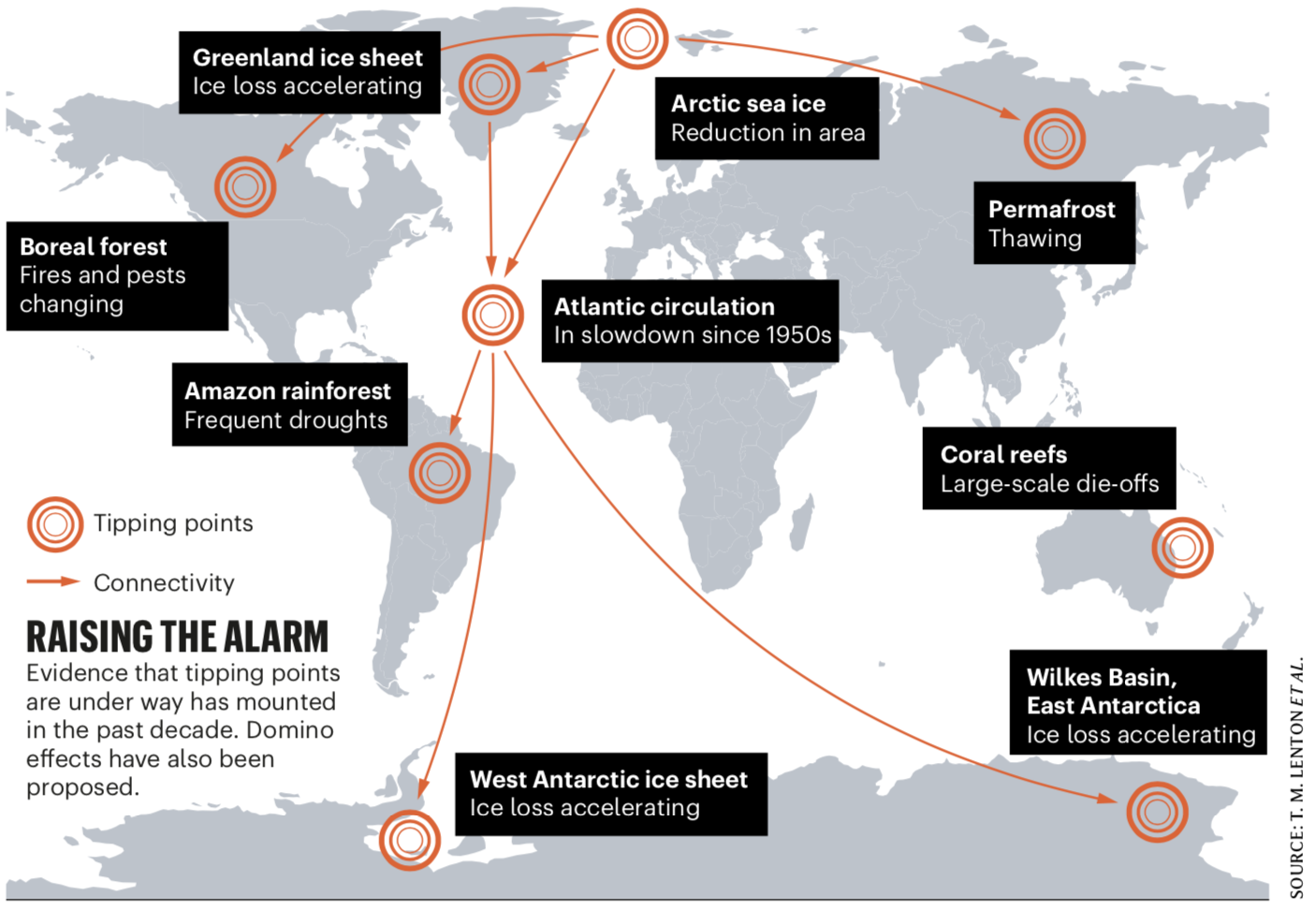
Climate tipping elements
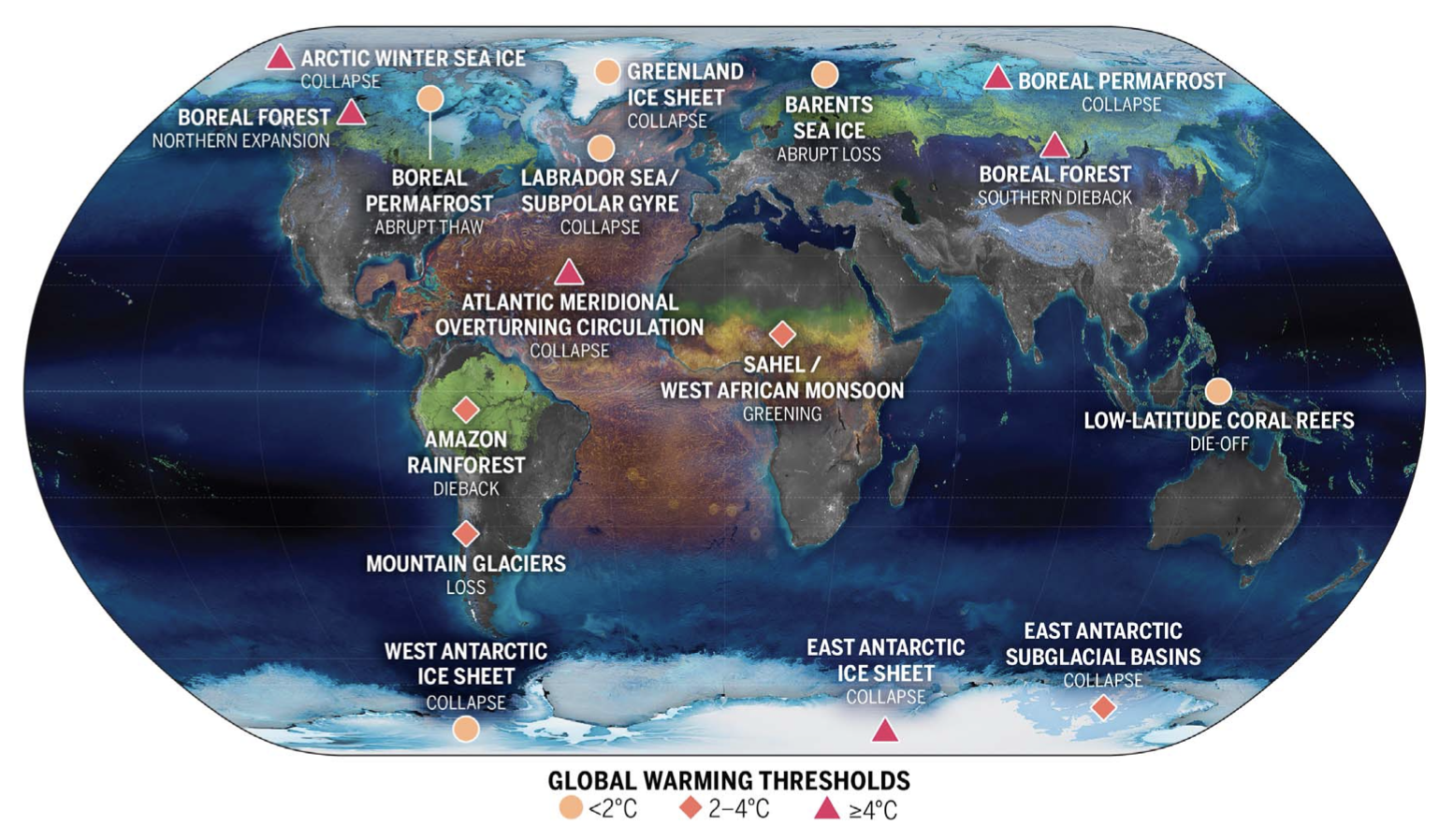
Climate tipping elements
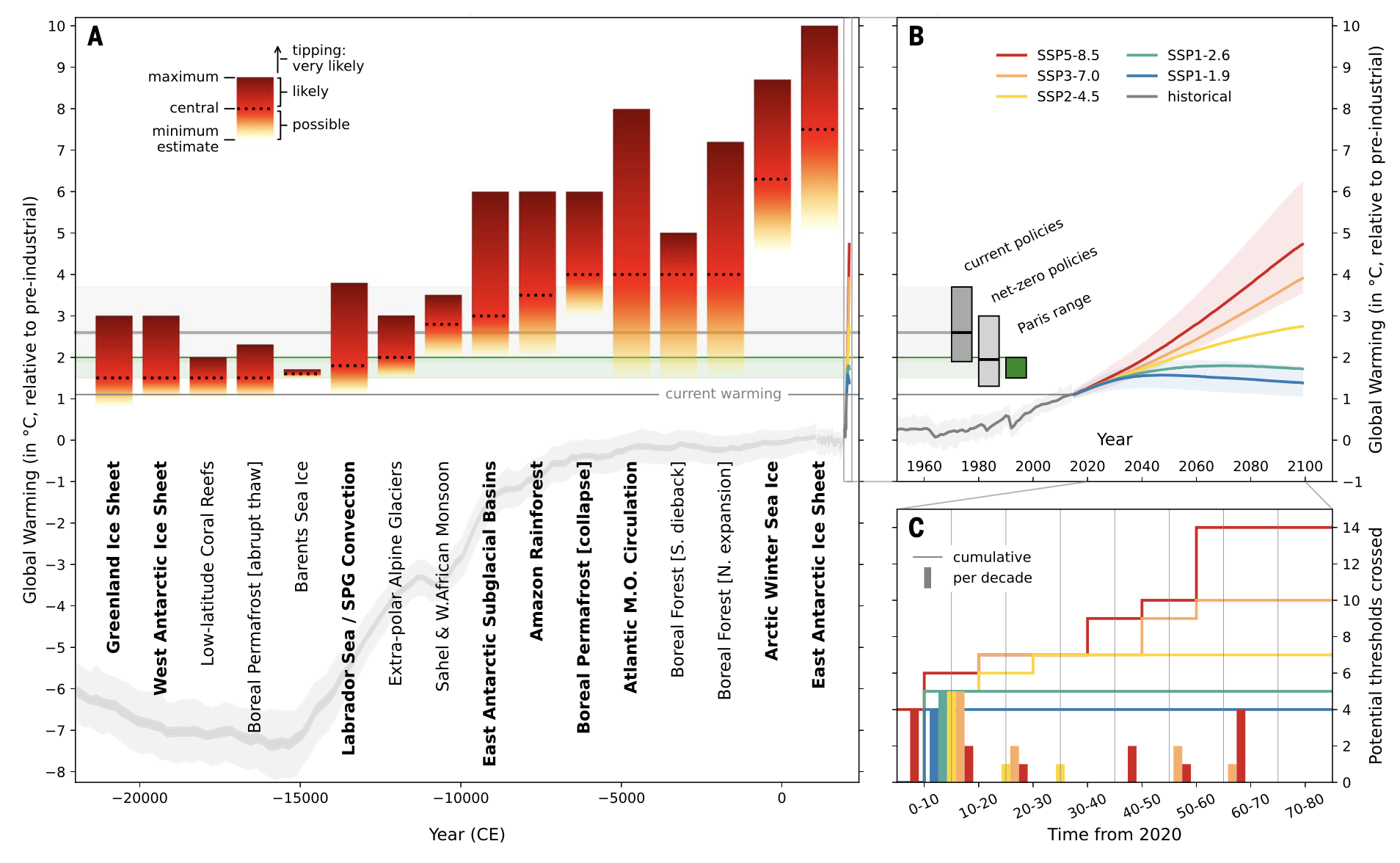
Climate is not the only one
Known tipping points
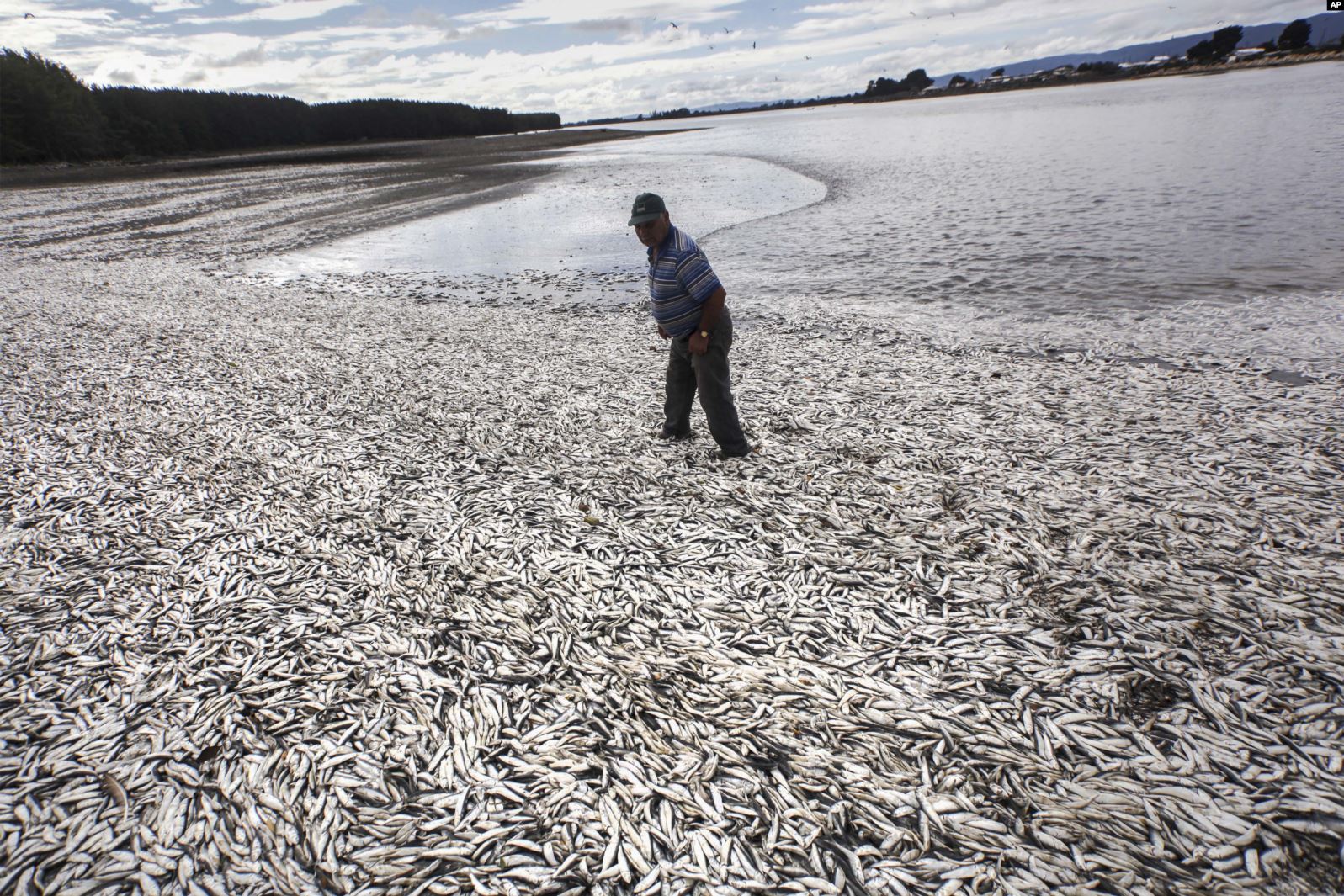
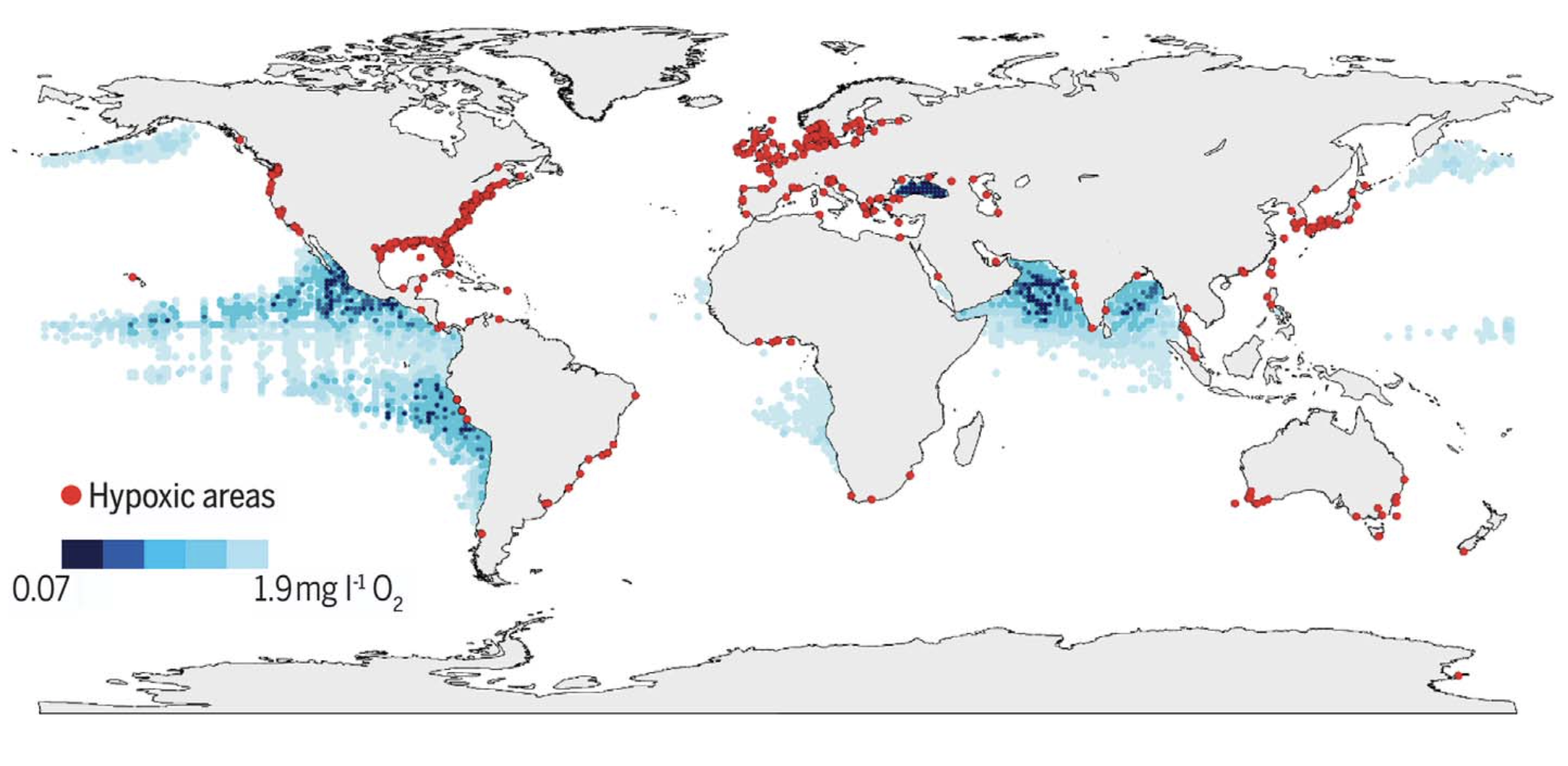
- Dissolved oxygen (\(ml O_2/L\))
- Normoxia: \(\gt 2 ml O_2/L\)
- Hypoxia: \(\le 2 ml O_2/L\)
- Anoxia: \(\lt 0.5 ml O_2/L\)
Known tipping points
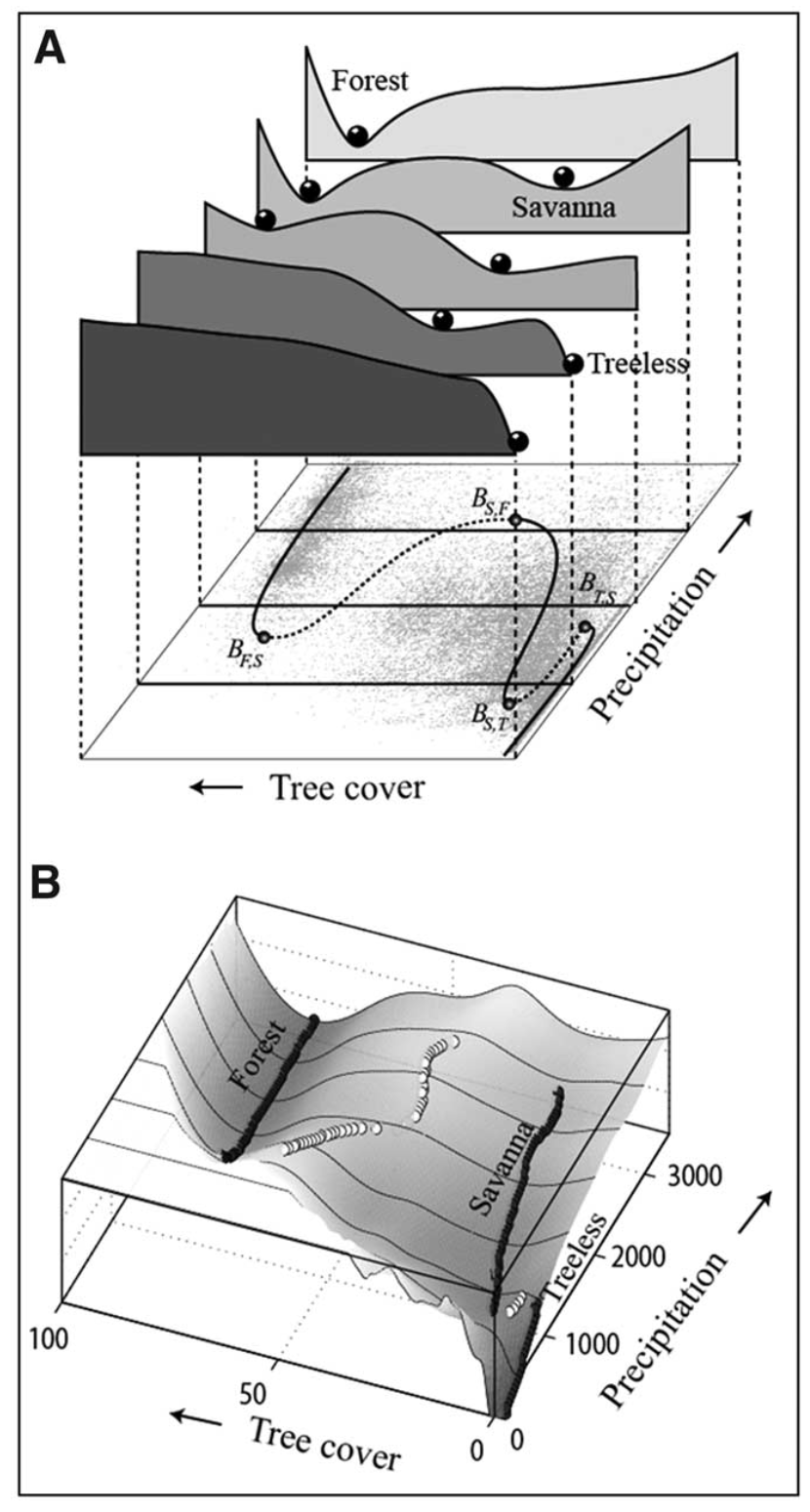
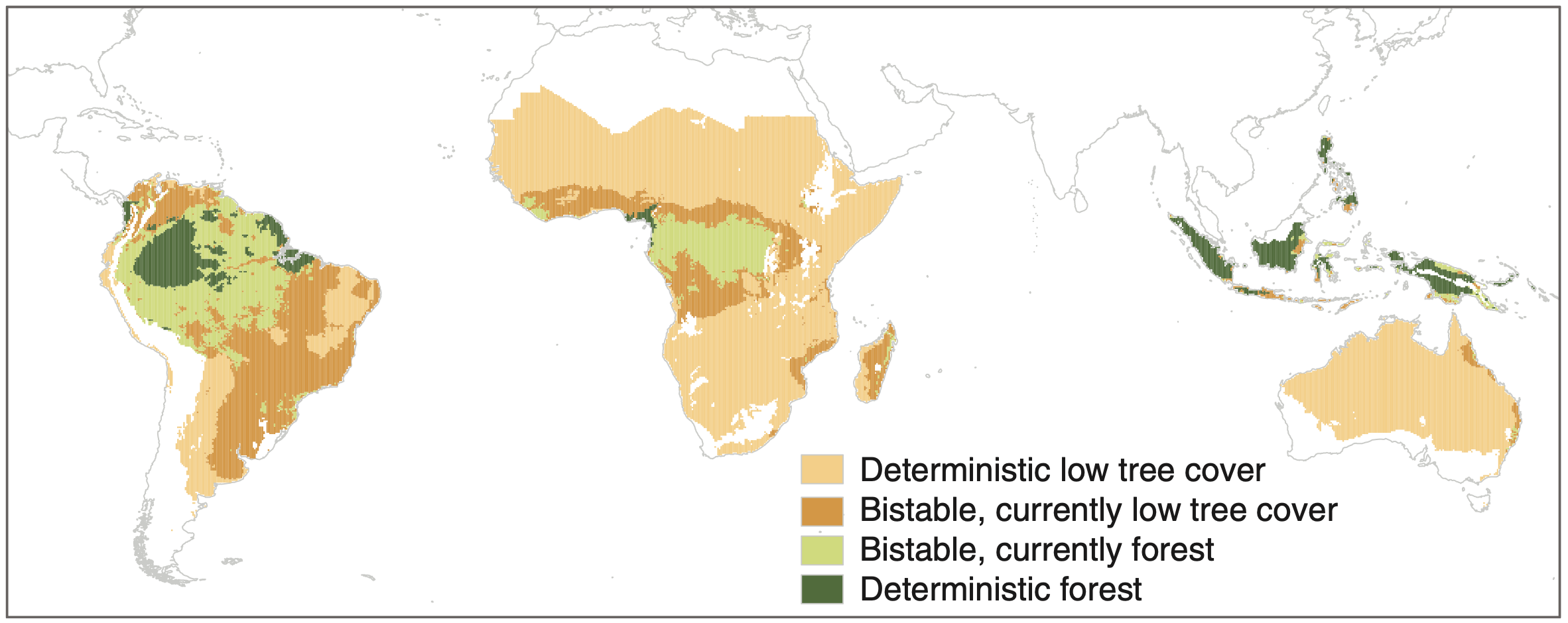
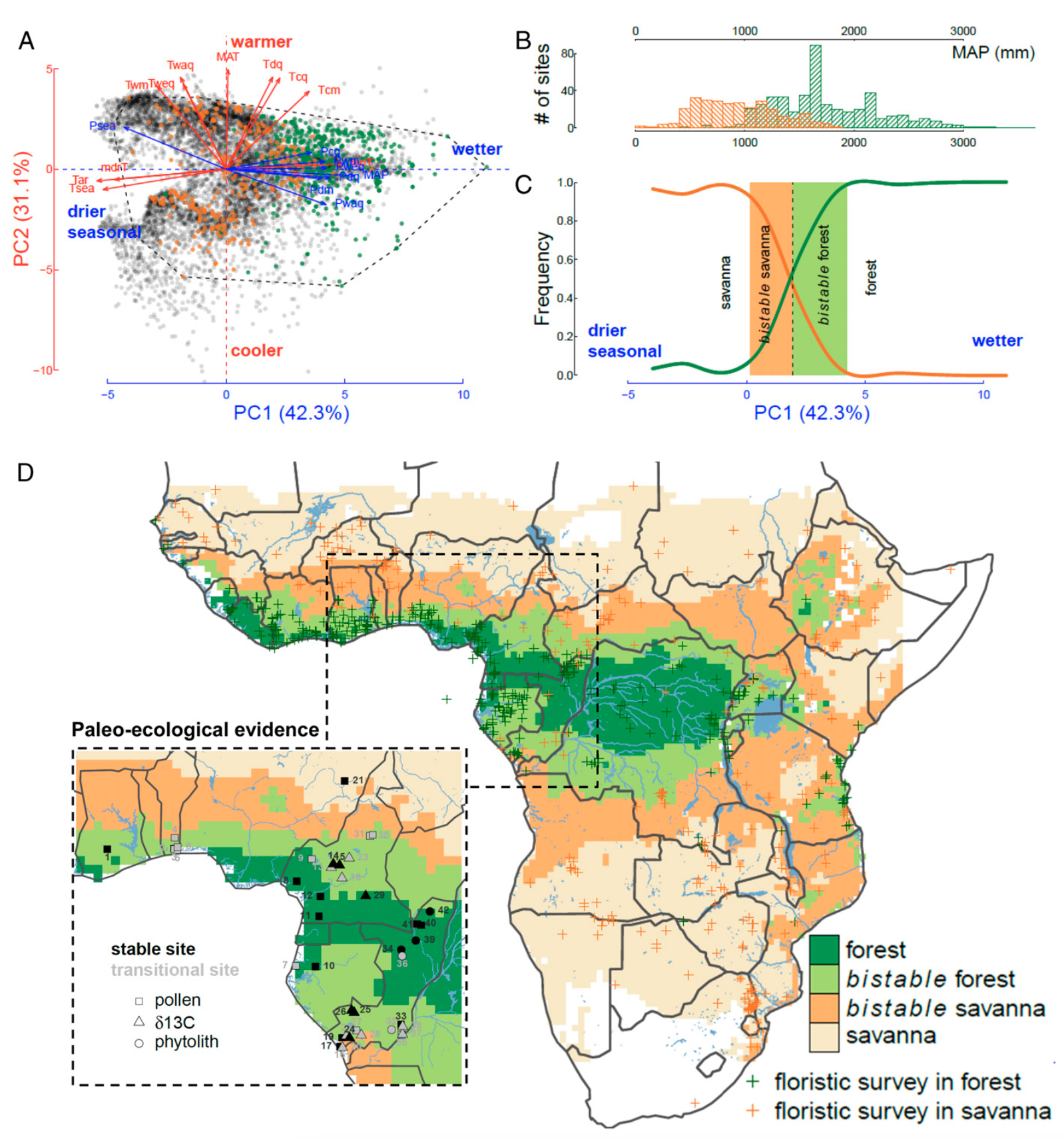
- Precipitation (mm) 🌧️
- Forest to savanna: ~1500mm
- Savanna to forest: >2000mm
- Savanna to treeless: ~500mm
Known tipping points
Suspected tipping points
Interactions
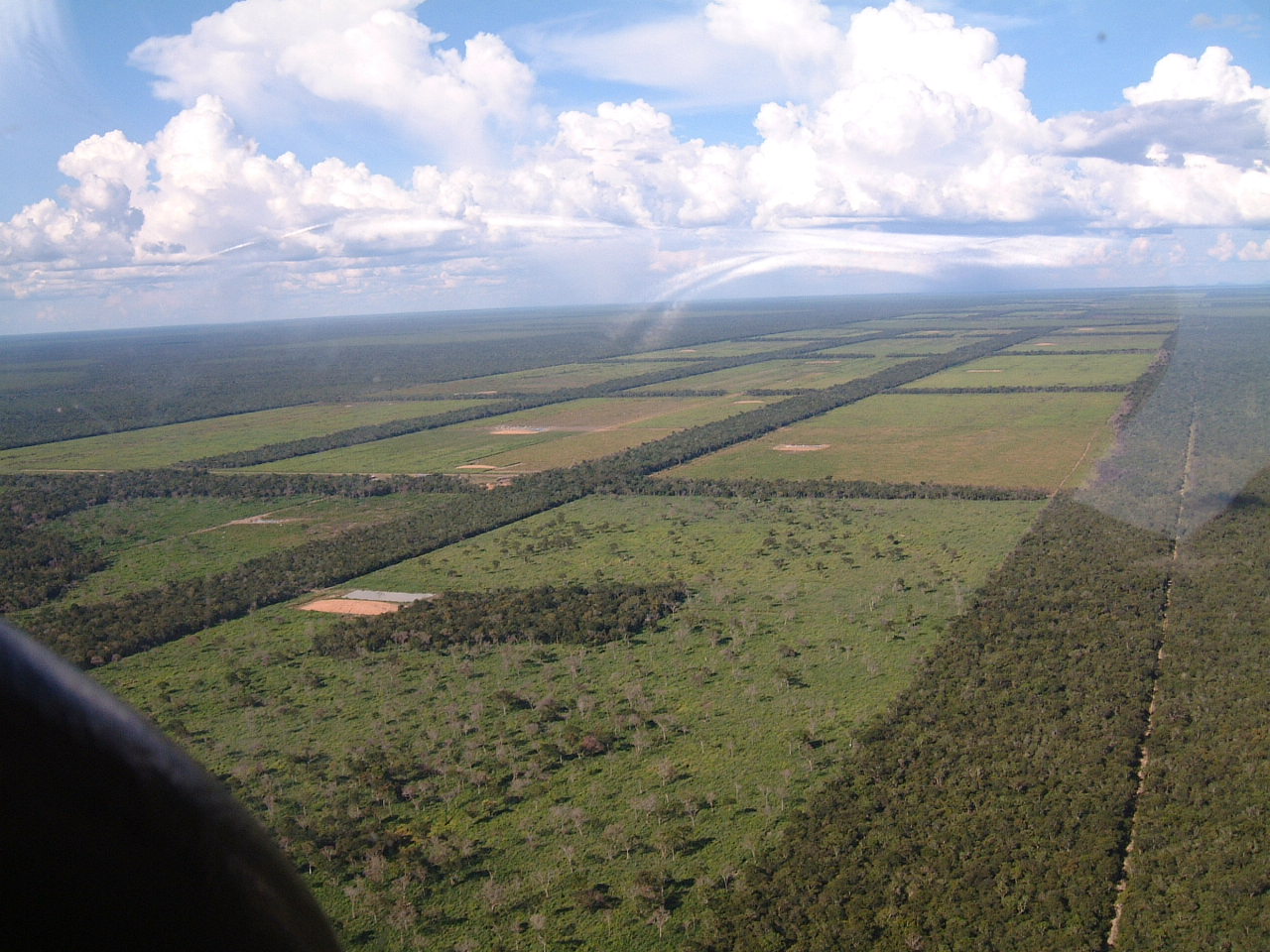
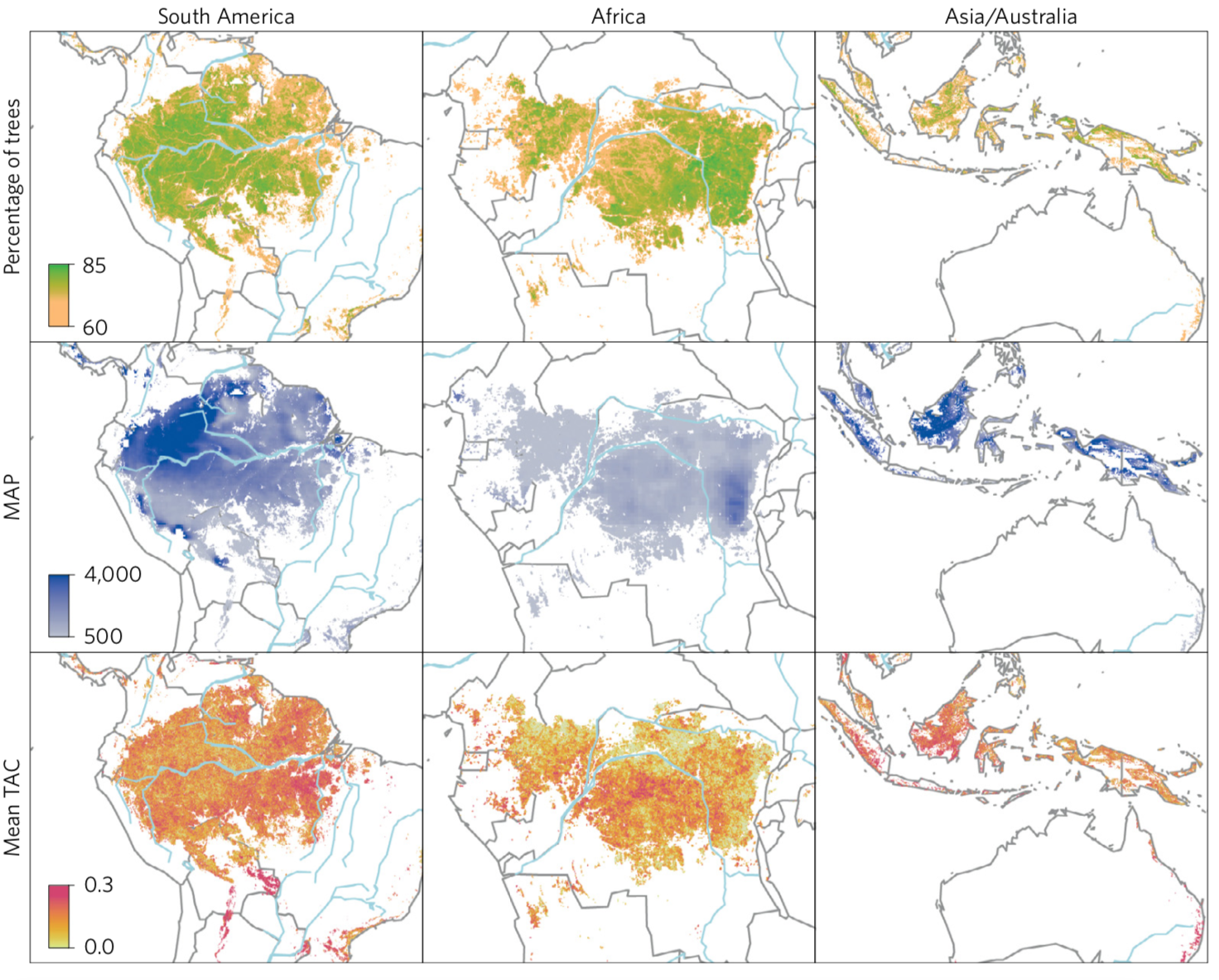
Amazon tipping points: 3-4\(^\circ C\), 1500mm rain, 40% deforestation, fire frequency?
Which will be hit first? How approaching one modifies another?
How do regime shifts interact?
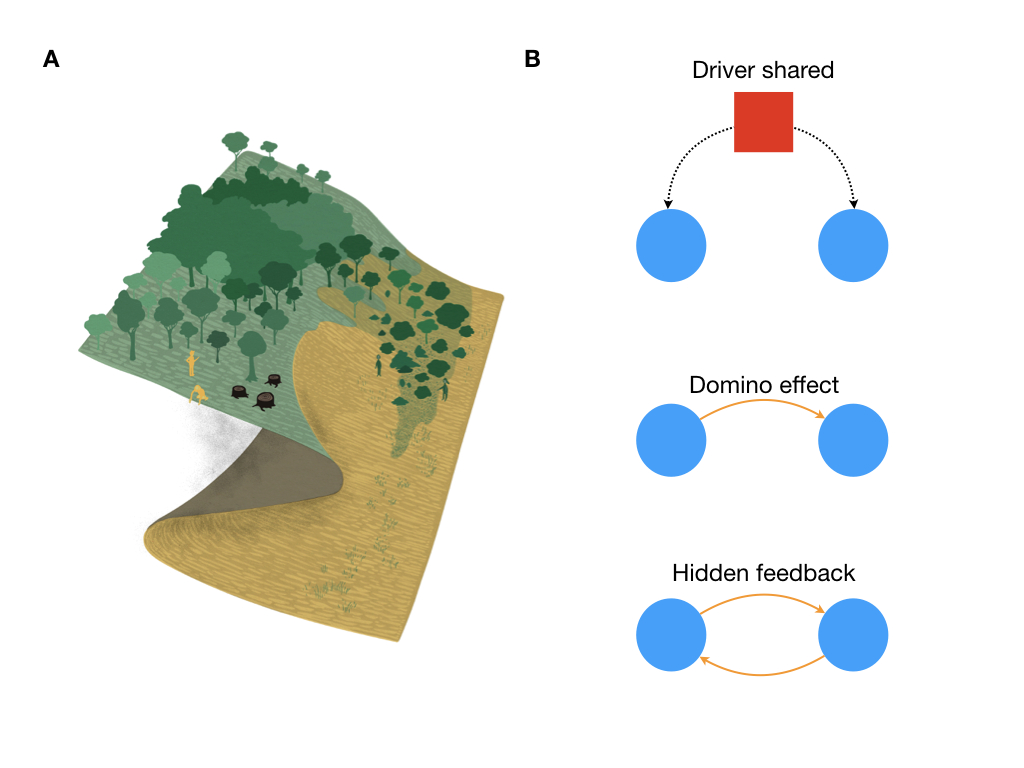
Whether the occurrence of one will increase the likelihood of another, or simply correlate at distant places
Conceptual and theoretical work
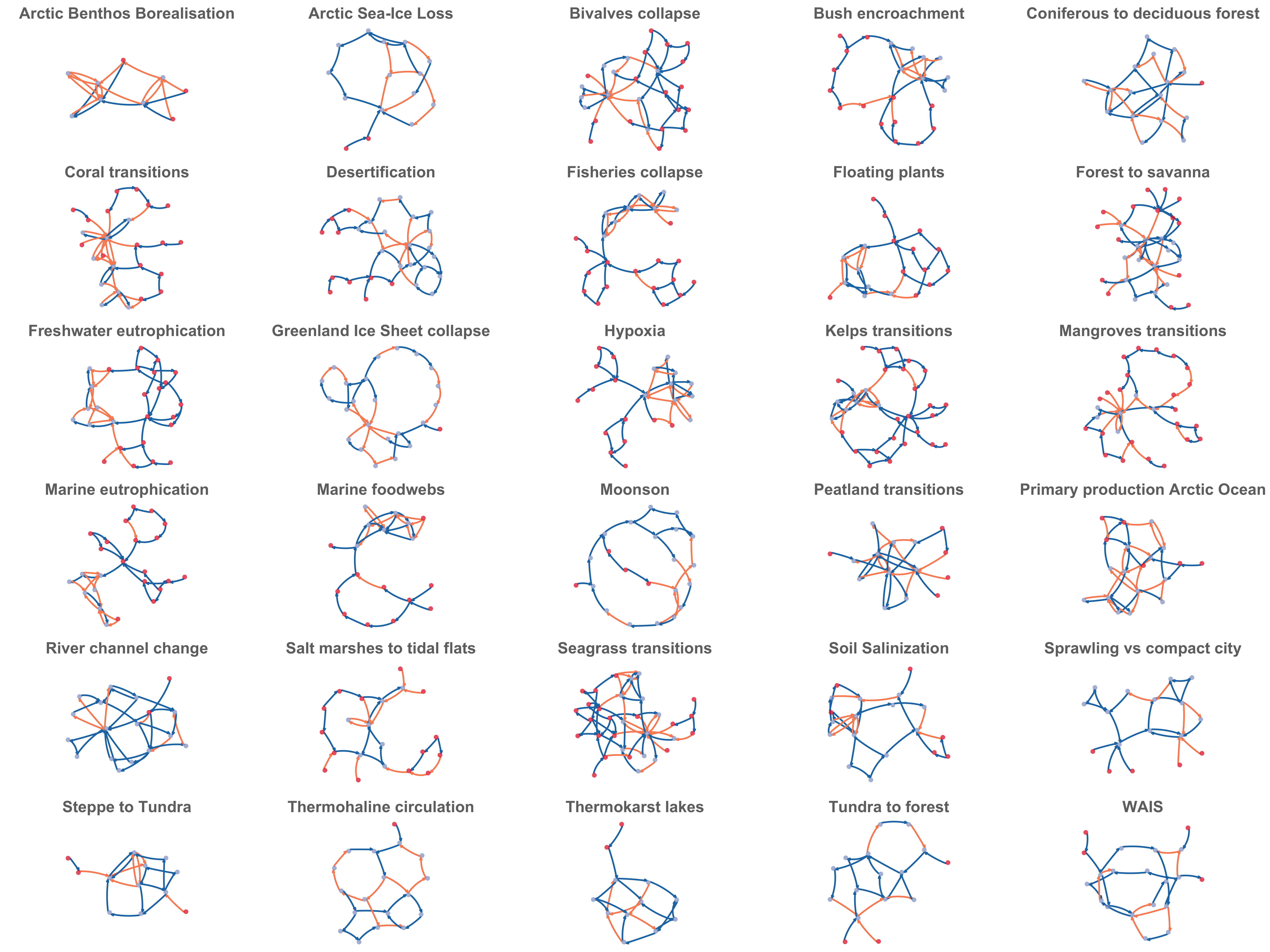
Source: Regime Shifts Database
Method
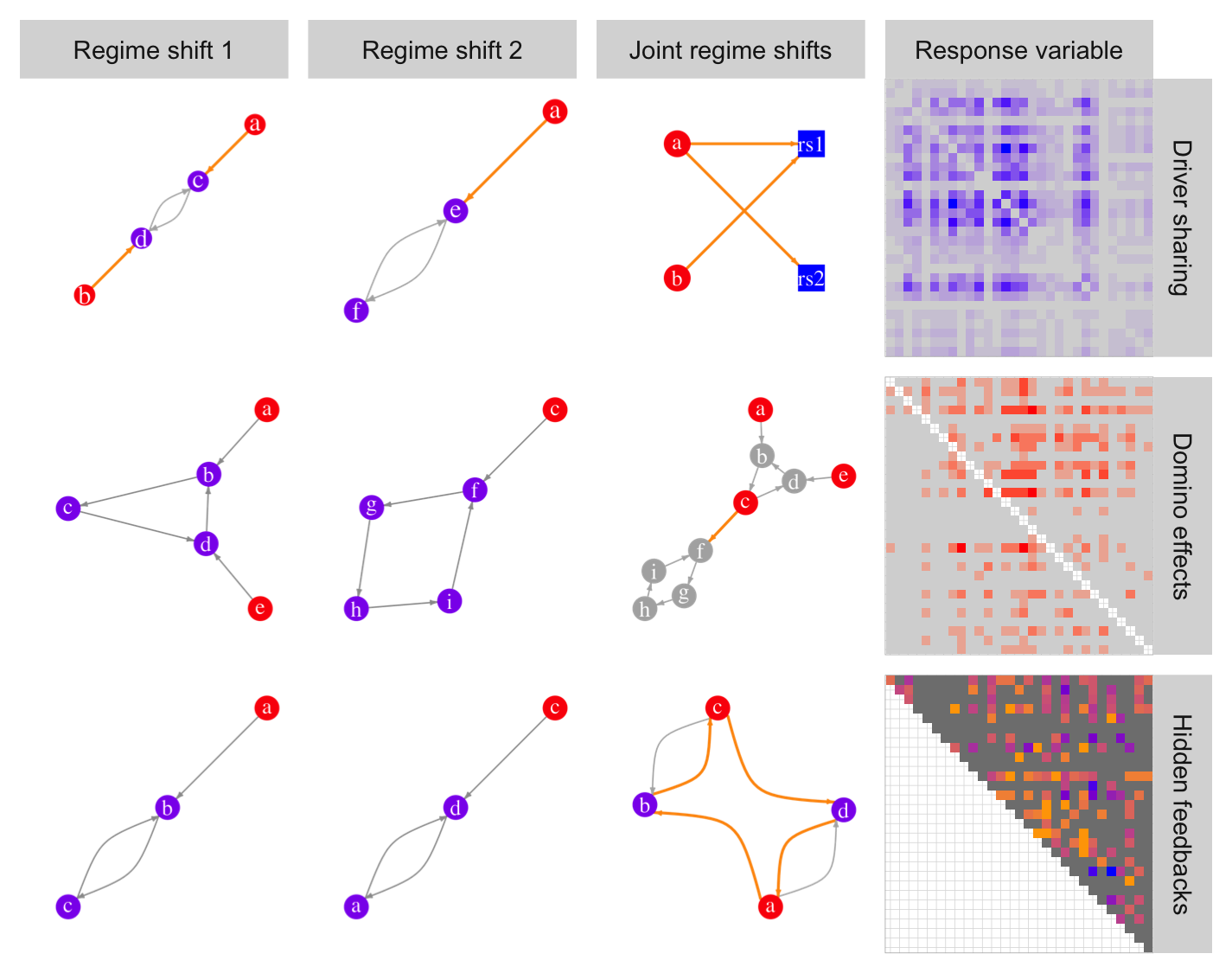
Rocha, J, et al . Cascading regime shifts within and across scales. Science 362, 1379–1383 (2018)
A worked example
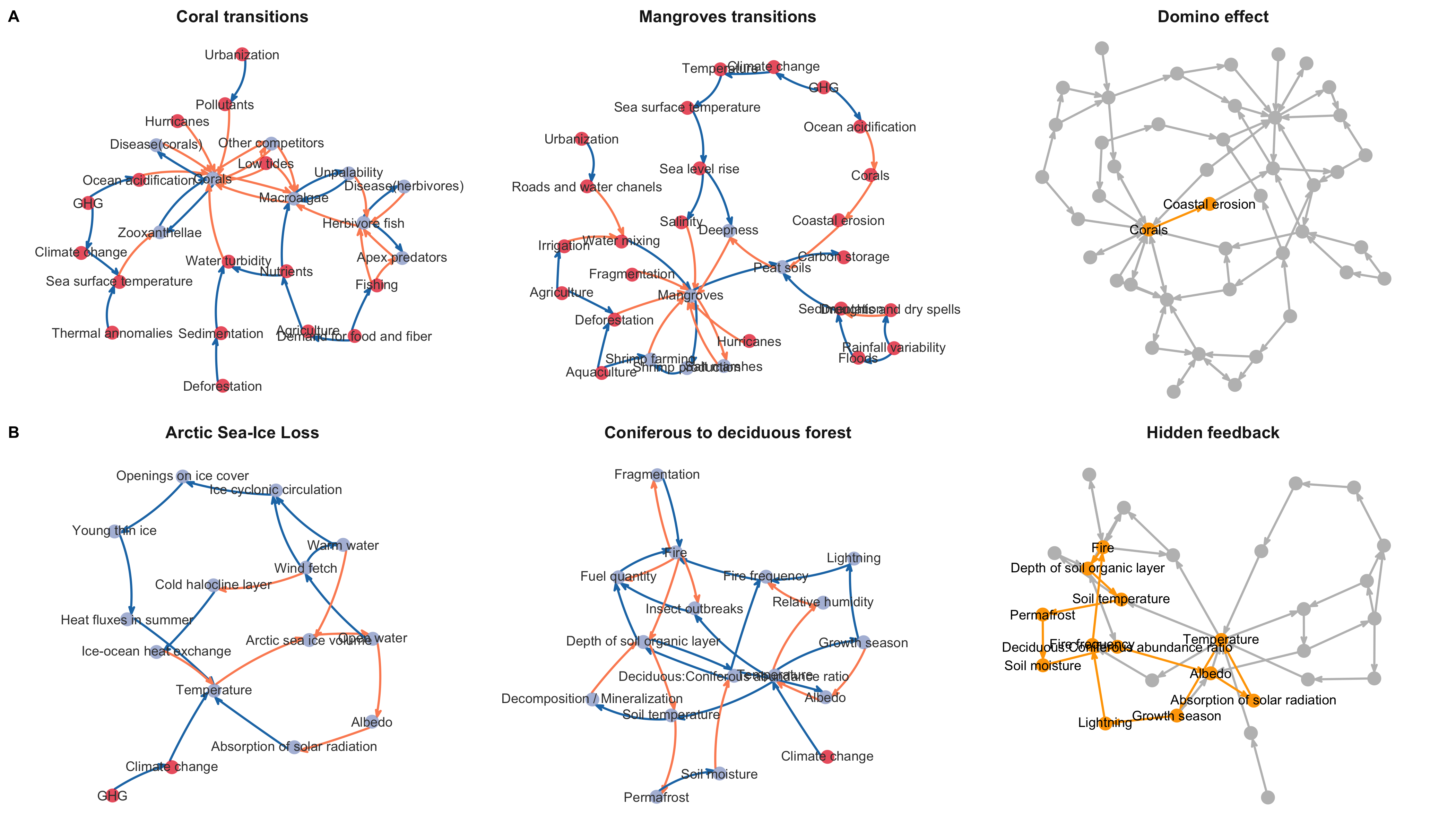
Cascading effects
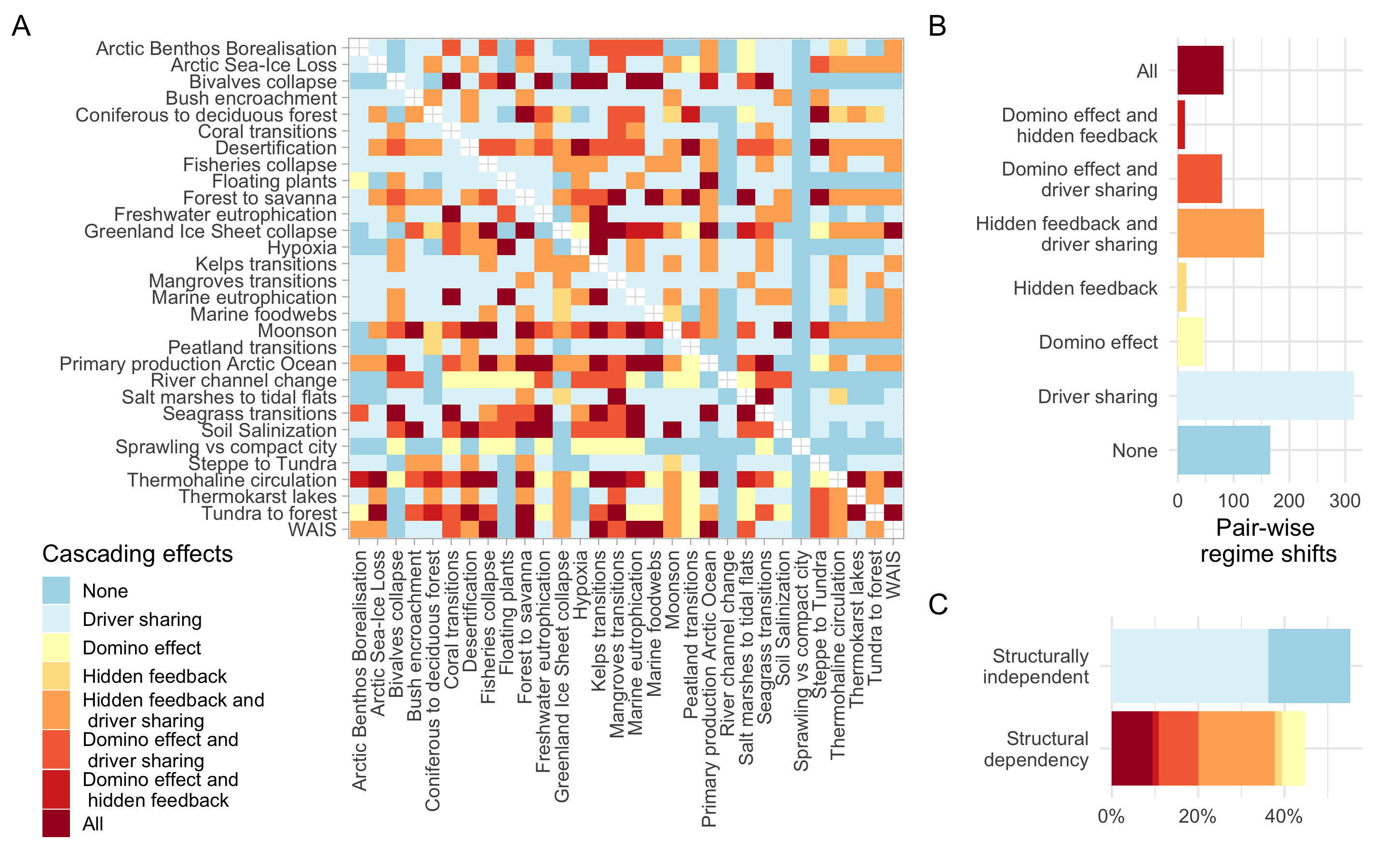
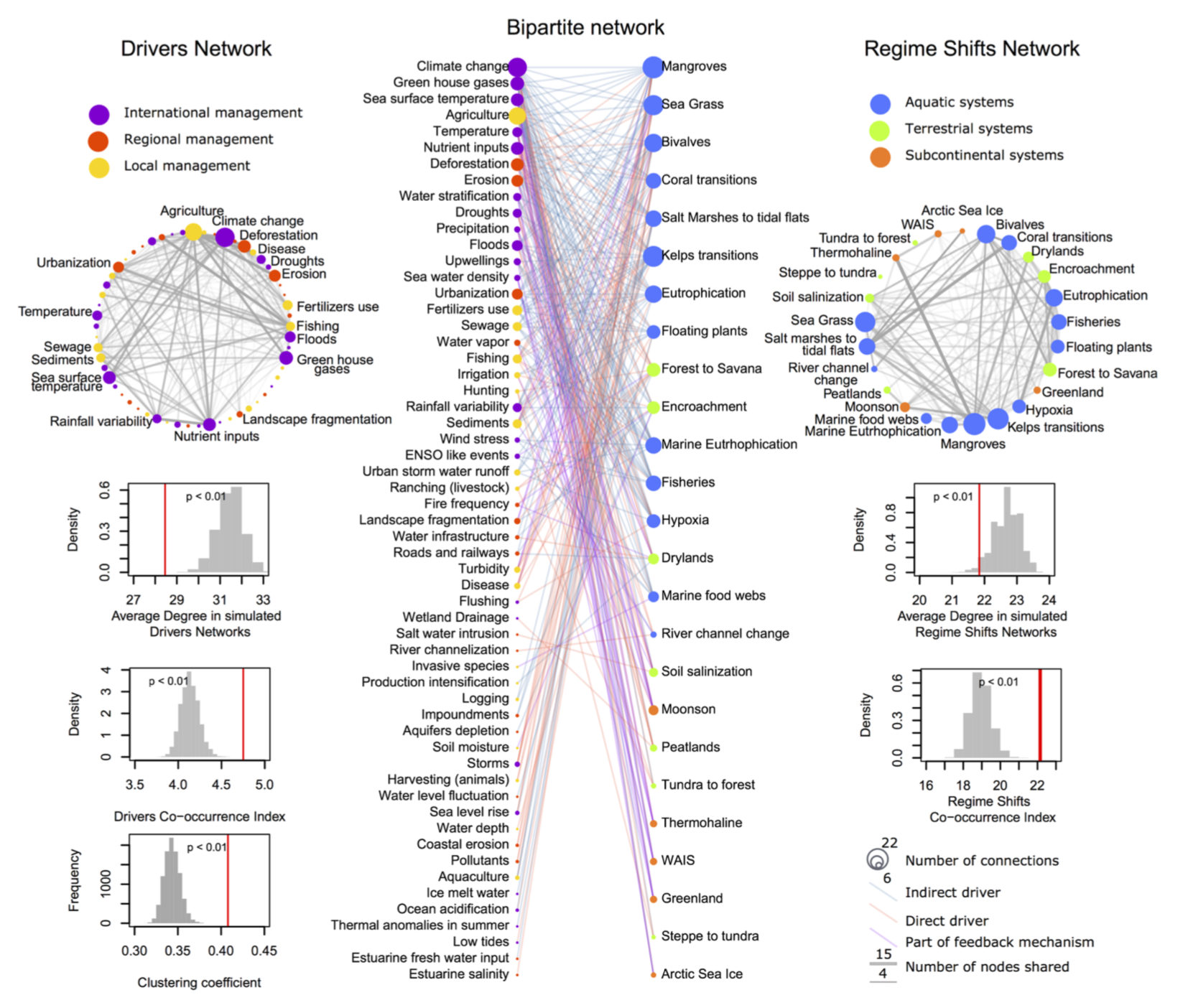
~45% of the regime shift couplings analyzed present structural dependencies in the form of one-way interactions for the domino effect or two-way interactions for hidden feedbacks
Driver sharing
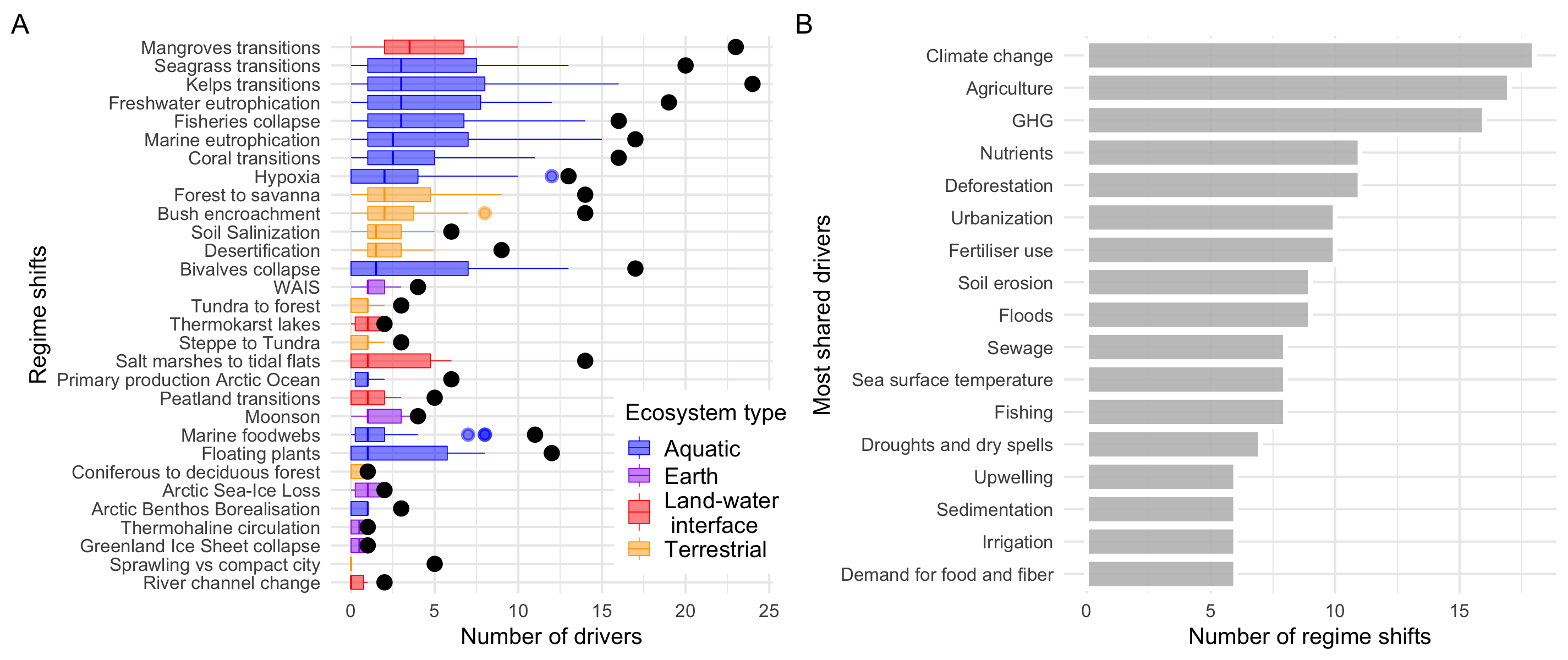
Aquatic regime shifts tend to have and share more drivers. The most co-occurring drivers are related to food production, climate change & urbanisation. 36% of pair-wise combinations are solely coupled by sharing drivers
Domino effects
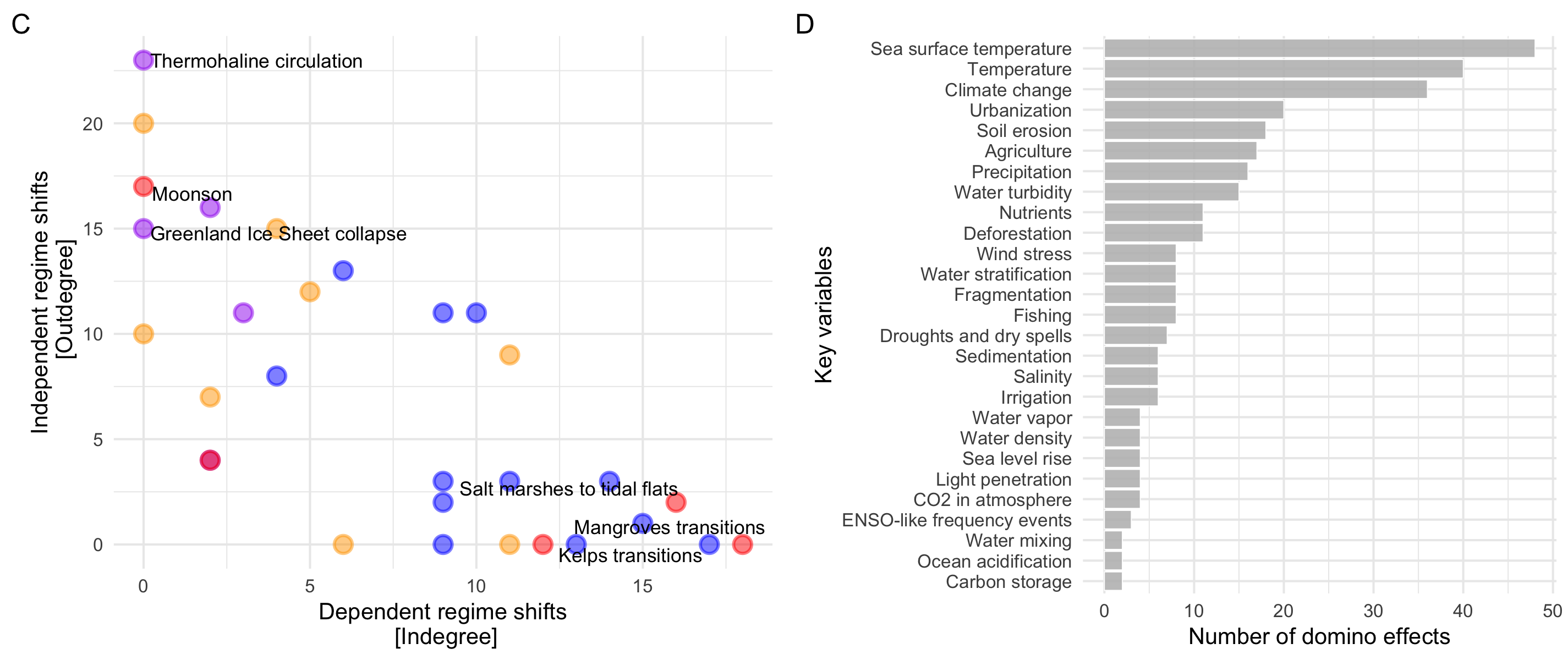
Evidence of cross-scale interactions for domino effects was only found in space but not in time. The maximum number of pathways found was 4, and the variables that produce most domino effects relate to climate, nutrients and water transport
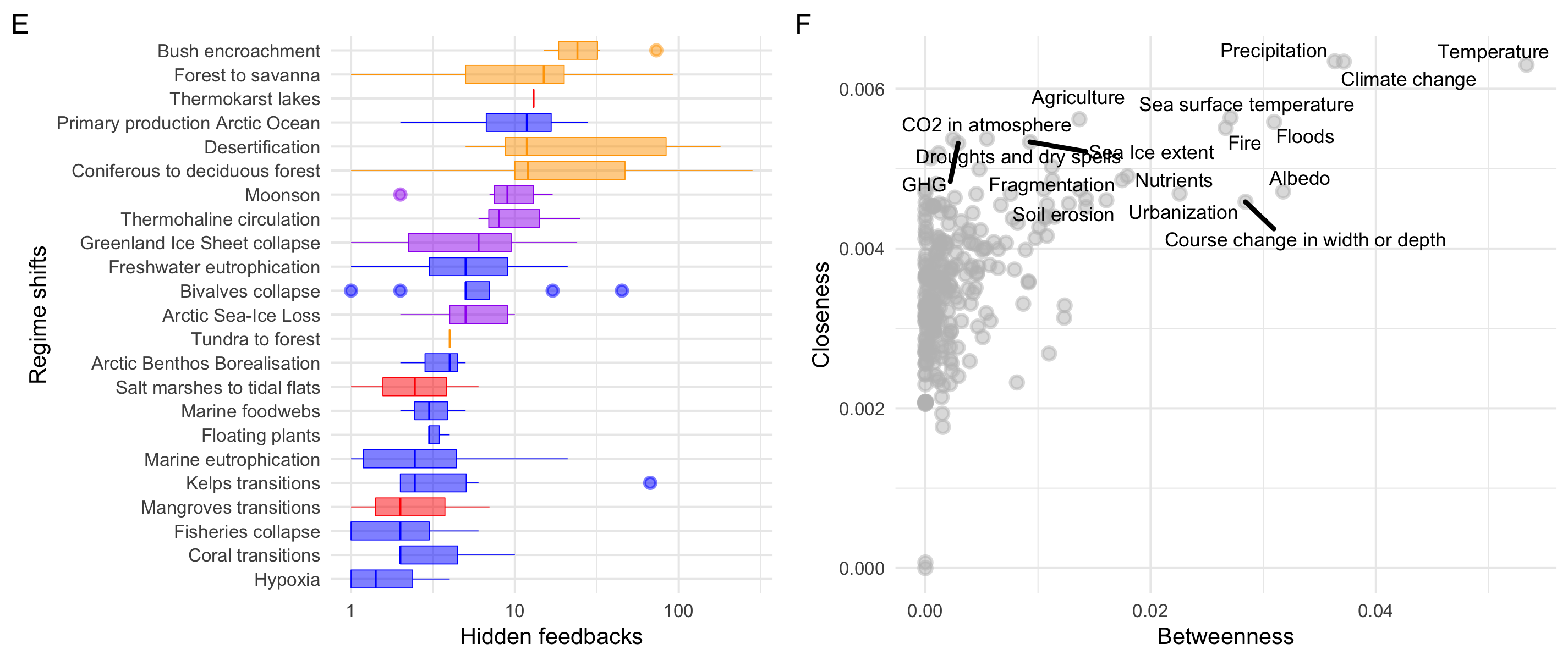
Trivia
What is your favorite take home message from their work?


05:00
Why does it matter? Earth Stewardship
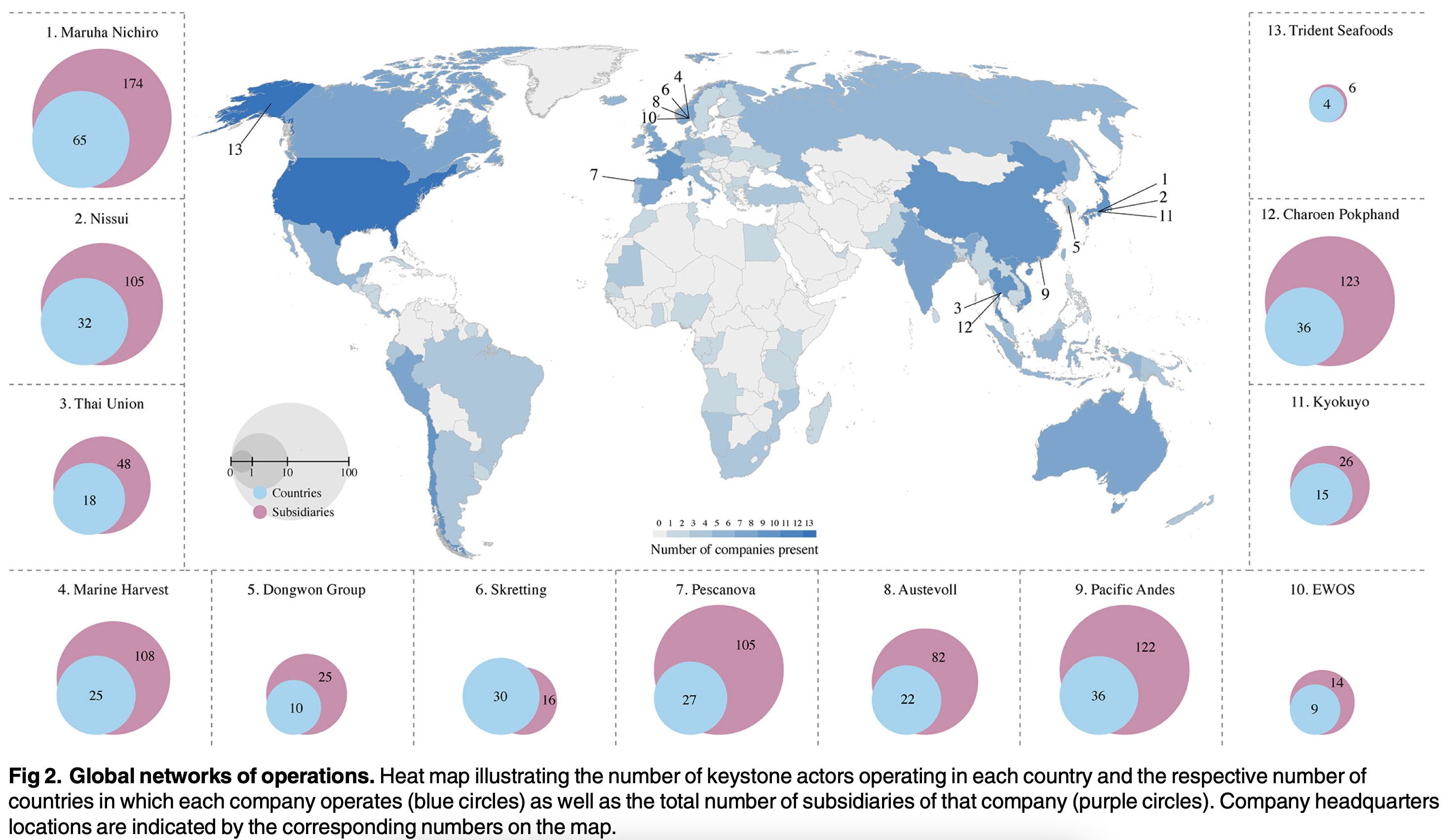
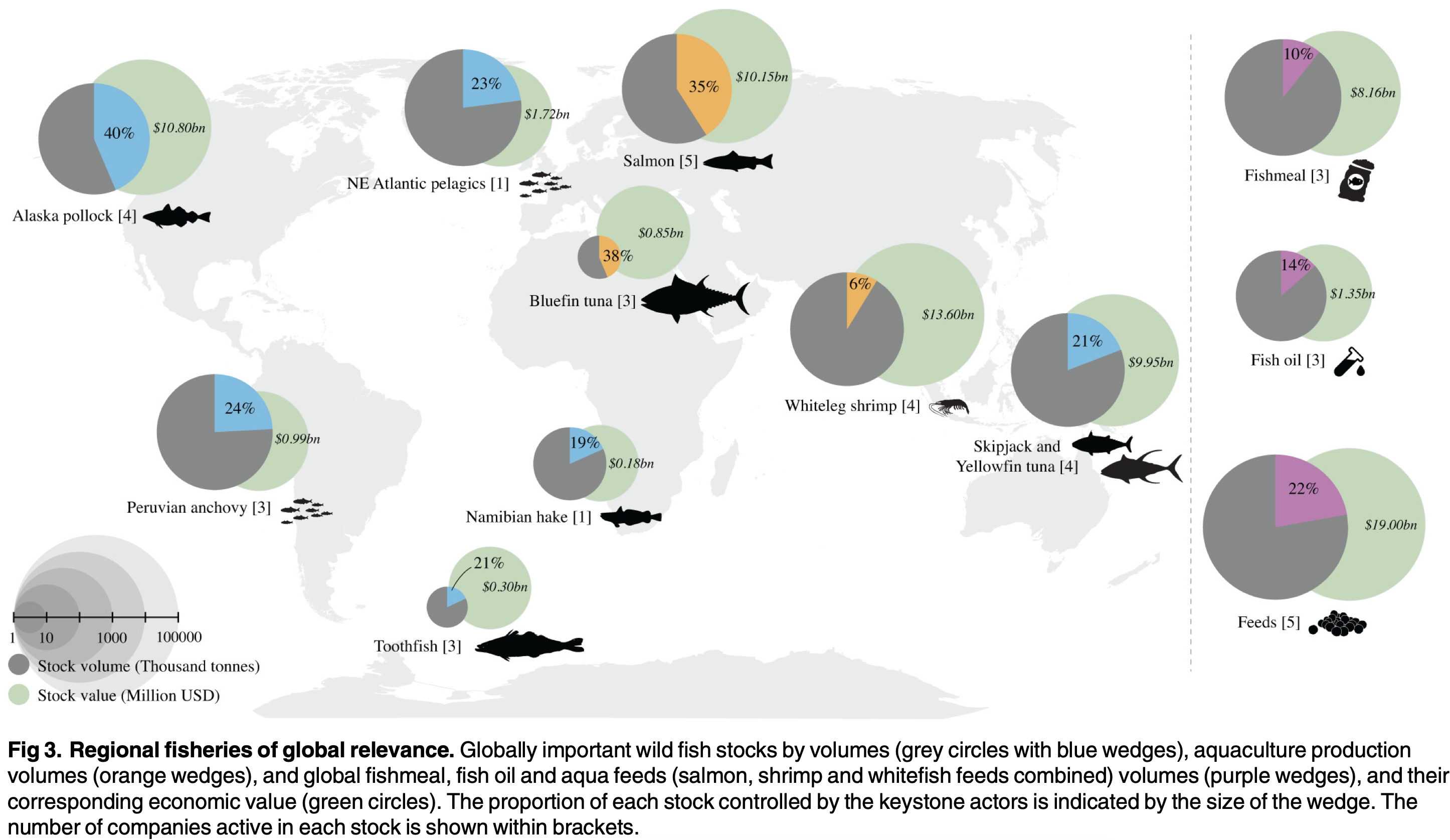
Who has the agency to make a difference?
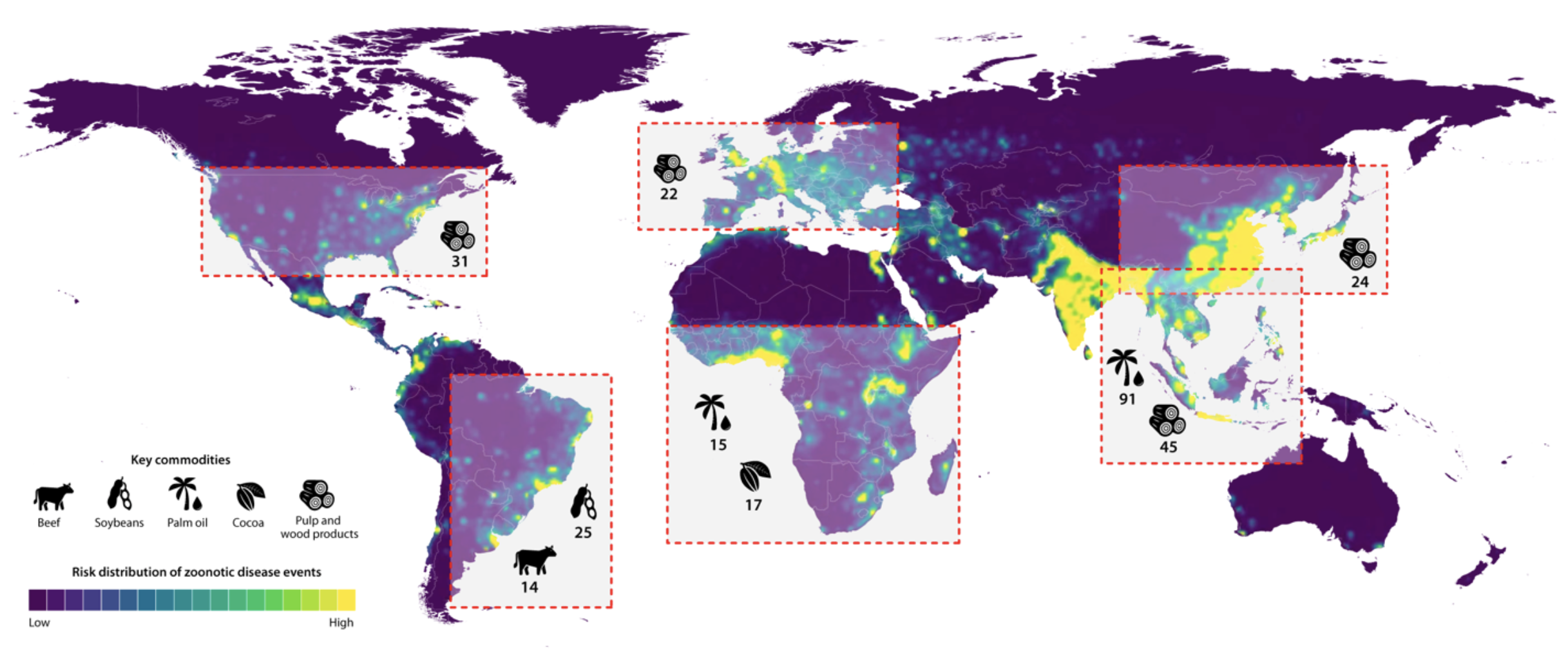
- “Zoonotic EID risk is elevated in
forested tropical regions experiencing land-use changes and where
wildlife biodiversity is high” Allen et al
2017
- Companies who extract natural resources
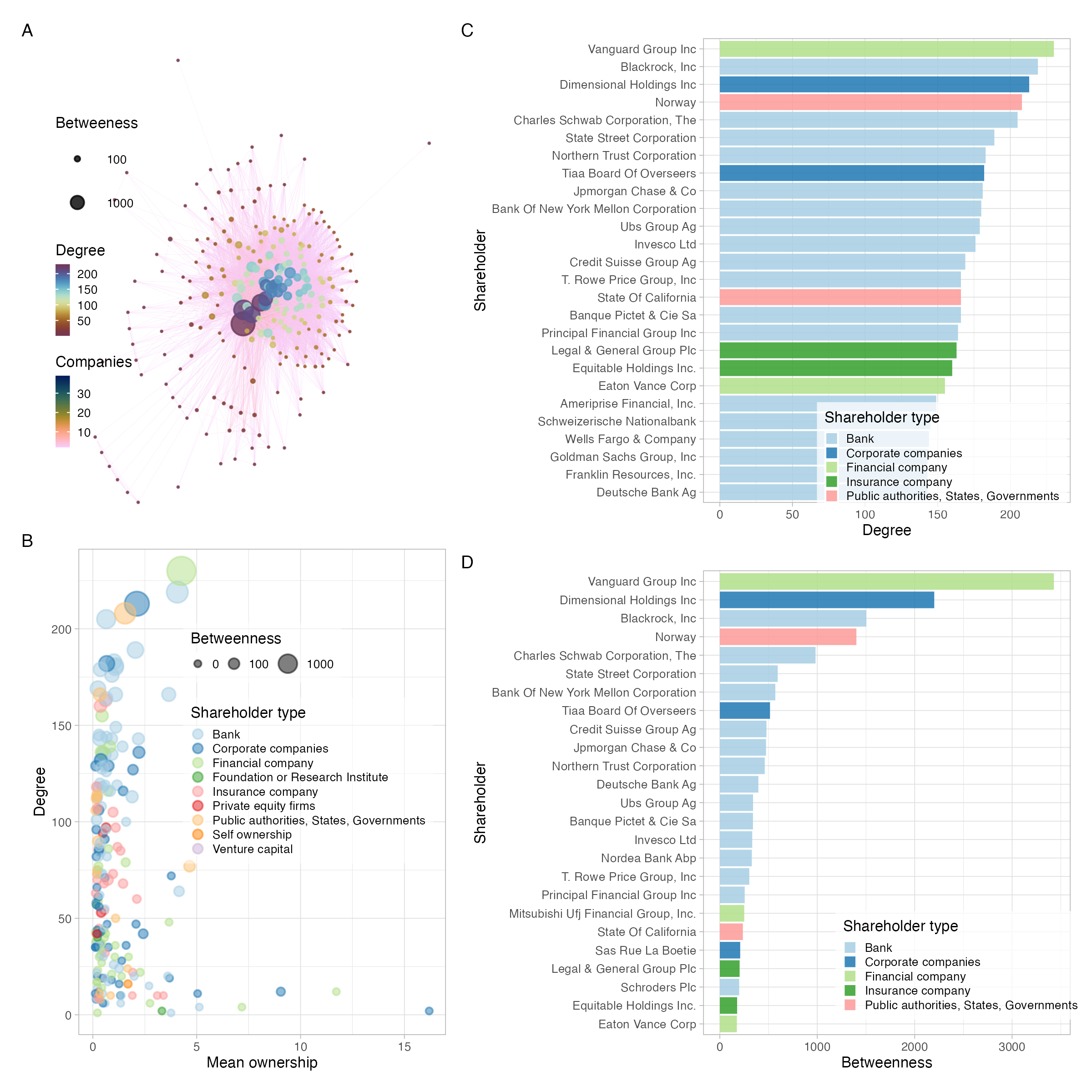
- Shareholders who invested in them
- Networks of shareholders with common investments
Regime shifts can be interconnected
- Climate is a central mechanism, but not the only one. Other mechanisms can trigger tipping cascades earlier than climate
- Multiple mechanisms means multiple opportunities for intervention
- Empirical evidence is missing: which connections are more relevant? what interventions has potential to slow down tipping cascades?
Analysis: one pixel
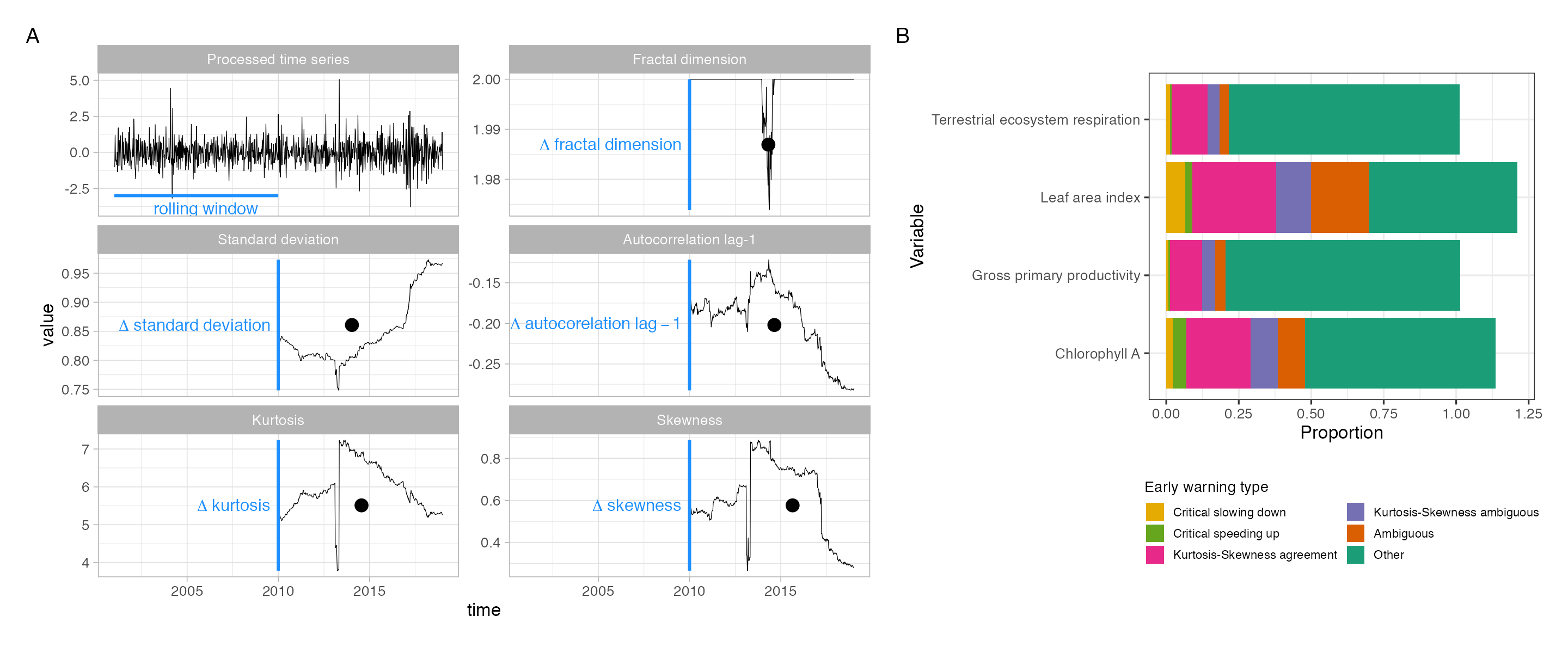
The generic resilience indicators do not necessarily align with critical slowing down or speeding up theories
Detection
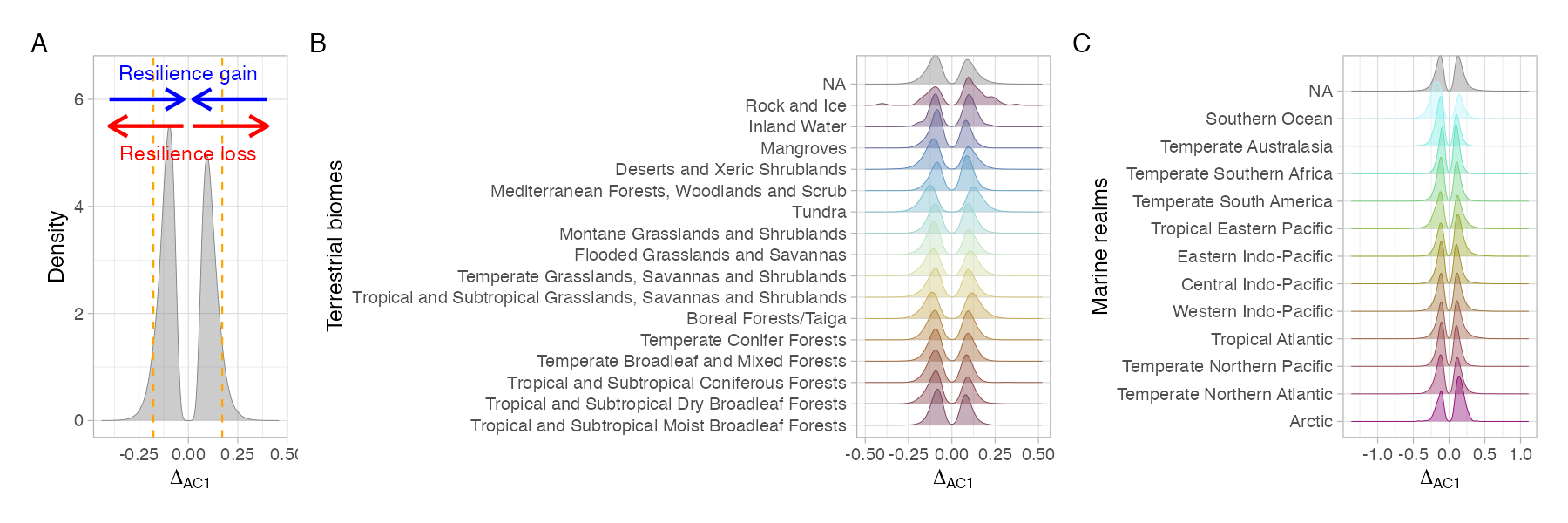
In the absence of ground truth, if \(\Delta\) is > 95% or < 5% of the distribution is considered a signal of resilience loss
Gross primary productivity
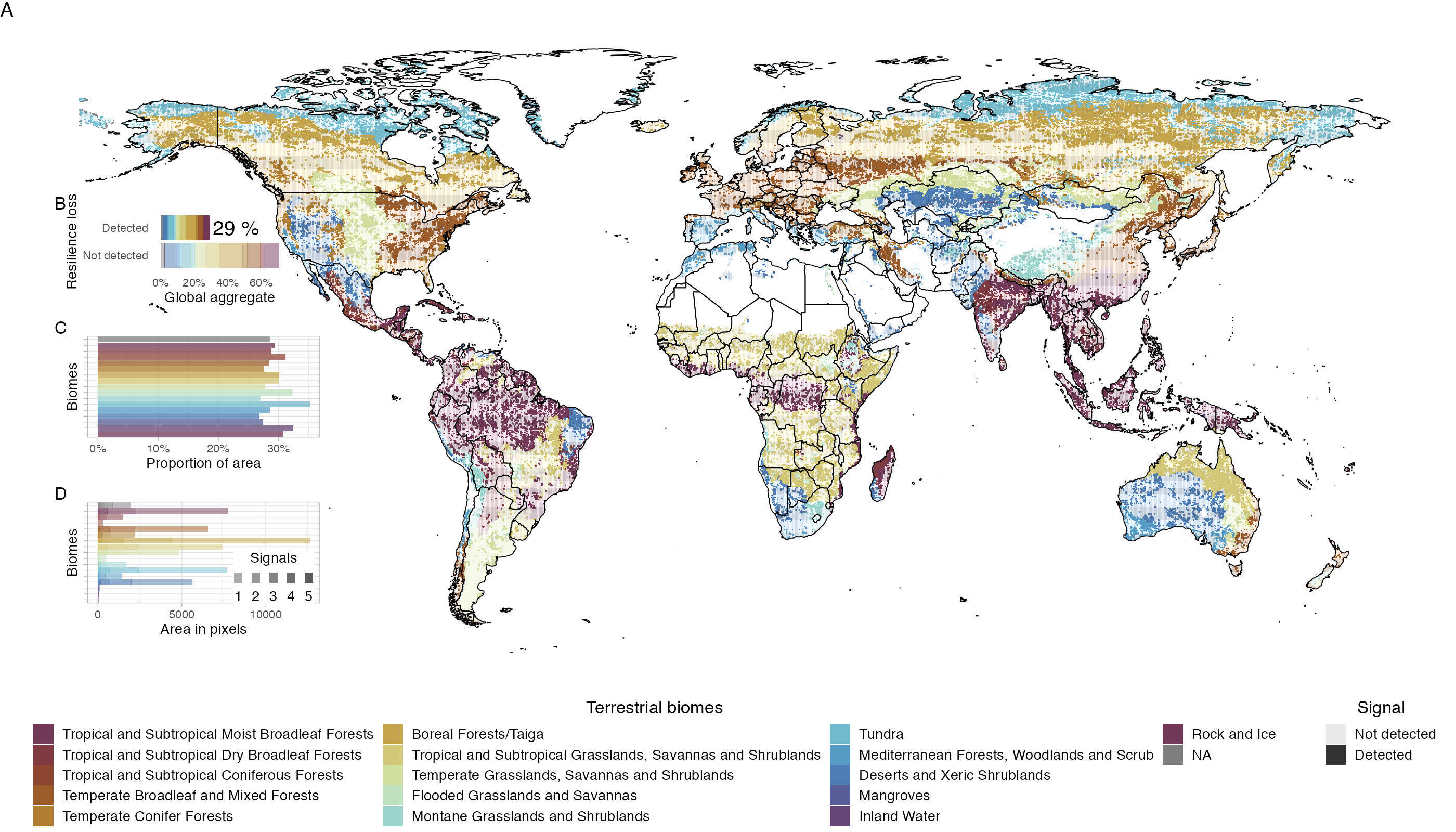
~30% of ecosystem show symptoms of resilience loss, boreal forest and tundra particularly strong signals
Chlorophyll A
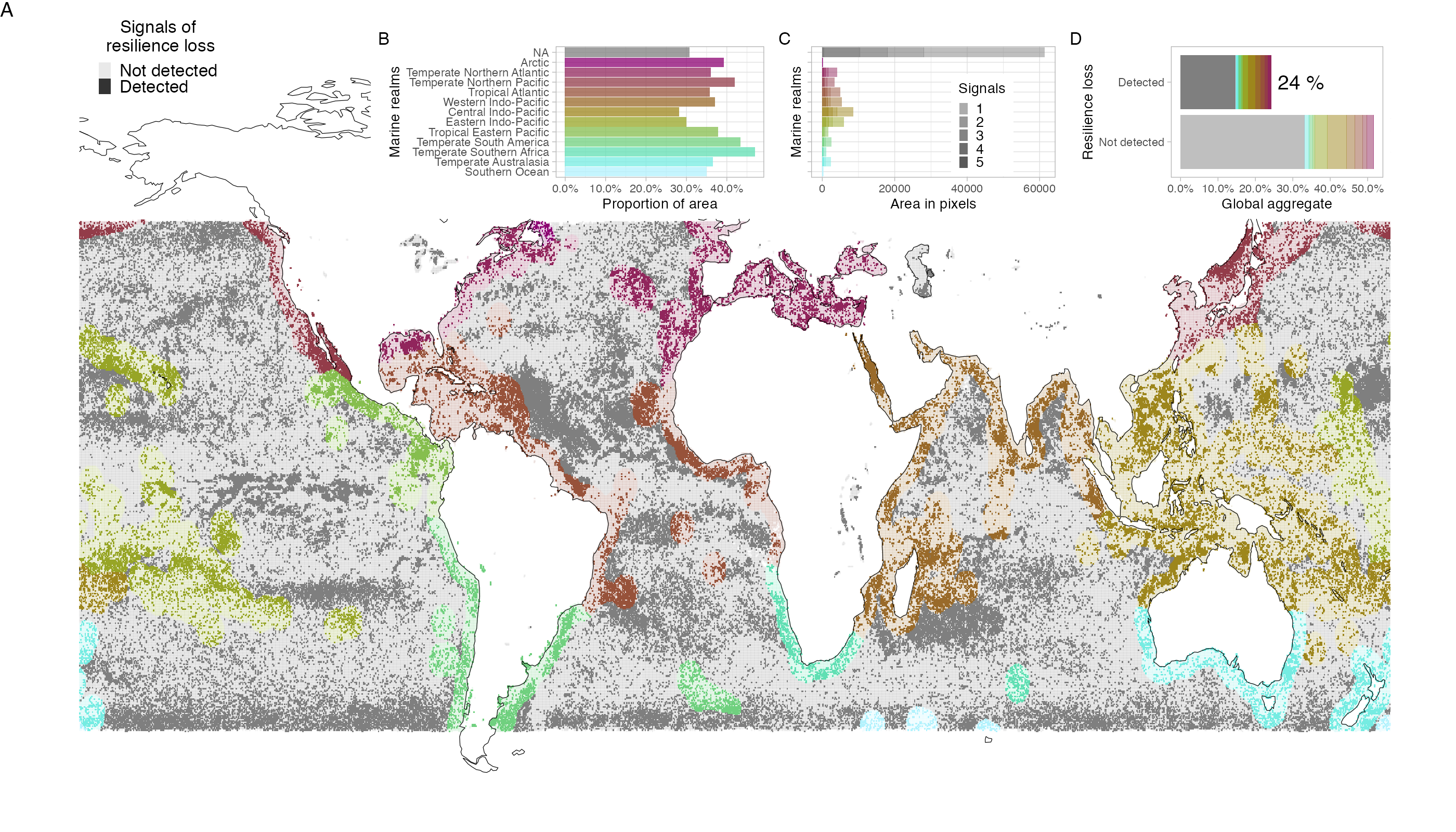
~25% of ecosystem show symptoms of resilience loss, Easter Indo-Pacific and Tropical Eastern Pacific Oceans particularly strong signals
Next steps
- Identify who has agency to make a difference
- Identify if the symptoms in one place are related to symptoms elsewhere: empirical evidence of cascading effects
- Use the network structure to manage and avoid escalating crises